

By Sharyn L. Flanagan
The Philadelphia Tribune
https://www.phillytrib.com/
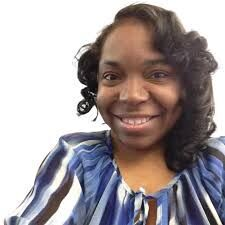
As Women’s History Month wraps up, I keep circling back to a question I’ve asked before. When people say “women veterans,” who do they picture?
I’m a Woman Marine, or “WM,” as we say in the Corps. I spent eight years on active duty and in the Reserve, working in aircraft maintenance and ordnance, jobs looked at as odd for women and even less expected for Black women. I wore the uniform proudly. I got filthy doing the work. I held responsibility that wasn’t symbolic, it had stakes, and I did exactly what my superiors and my country asked of me.
That kind of invisibility doesn’t suddenly show up the day the uniform comes off. It’s there while you’re serving, then it trails you afterward, reinforced by old ideas about who serves, who leads and whose sacrifice is worth keeping in public memory.
Women have always defended this country, plenty of the time with no real recognition and no steady support. For Black women, the problem cuts deeper. We’ve served in the space where gender erasure and racial erasure overlap, so our contributions get compressed into a footnote, if anyone bothers to mention them at all.
Even now, people act surprised to hear that women work on flight lines, in hangars and in ordnance shops, and even more surprised that a Black woman might be the one loading weapons, tracking down problems in aircraft systems or signing off on maintenance that keeps pilots alive. Most of the disbelief I run into isn’t openly hostile. It’s routine. It’s reflex. A steady signal that, in their minds, I didn’t match the picture.
That gap between reality and assumption comes with a cost.
When female veterans aren’t seen, our needs get misread. Our leadership gets passed over. Our stories don’t make it into the narratives that shape policy, health care, employment and even the way the country remembers its wars. People will thank us in broad terms, then question us up close, asking who we served with, what our husband’s rank was or whether we were “really” in the military.
If you’re a Black female veteran, the skepticism turns up louder.
Every time someone notices me when I wear my Marine Corps jacket, they ask if my husband or father served — because I couldn’t possibly have been in the Marines.
American history is filled with women whose service demanded a kind of courage that went well beyond the official job description. Cathay Williams, for instance, had to disguise herself as a man to serve as a Buffalo Soldier in the 1800s because the Army wouldn’t take her as a woman. Harriet Tubman is celebrated for the Underground Railroad, yet far fewer people recognize her as a Union Army scout and strategist.
Move closer to the present and the list keeps going. Maj. Gen. Hazel Johnson‑Brown became the first Black female general in the U.S. Army at a time when her race and her gender were treated as drawbacks, not strengths. Maj. Gen. Marcelite Harris, the first Black female general in the U.S. Air Force, led in ways that changed logistics and sustainment across the service.
And for Marines like me, Capt. Vernice “FlyGirl” Armour is a clear example of what visibility can mean. She was the first Black female combat pilot in the Marine Corps, flying attack helicopters in Iraq, and yet her name still doesn’t ring a bell for far too many Americans. Her story sits off to the side, like so many others, despite what it represents.
None of these women are flukes. They’re proof.
Proof that Black women have always served, with skill, with backbone and often with no applause. Proof that the military didn’t move forward only because policies changed, it moved because individual women worked through isolation, absorbed the pressure and forced doors open so others could walk through them with less resistance.
I didn’t put on the uniform for praise. Most of us didn’t. Still, recognition matters, not for ego, but for honesty.
It matters because young women thinking about service deserve more than a recruiting image. They should be able to see real women who maintained aircraft, led troops, flew missions and carried serious responsibility every day.
Black women need to know there’s a lineage behind them, and a future in front of them, where excellence in service is not a surprise.
As this Women’s History Month ends, I hope we don’t treat female veterans like one tidy storyline or a symbolic box to check. Widen the frame instead. Let the story get more complicated. Say the names of women whose service has been erased more by habit than by intent.
And go out of your way to find female veterans. Listen to them. Bring them into leadership, into storytelling, into policymaking, into remembrance. Support organizations that center female and Black veterans in March, yes, but also in every other month. Some of these groups include National Association of Black Military Women, Black Veterans Project and Women Veterans Interactive. These groups address specific disparities in care, advocacy and social support for minority and female veterans.
Visibility isn’t charity, it’s accuracy. If we want to honor service, we have to tell the whole story.
Here’s the truth. Female veterans aren’t rare. Black female veterans aren’t new. Those of us who served in demanding, technical and combat-adjacent roles aren’t exceptions — we’re facts. We’ve always been here, and we’re not done telling our stories.
Sharyn L. Flanagan is the News Editor of The Philadelphia Tribune. She also served eight years in the U.S. Marine Corps. Her military service includes assignments in South Carolina, North Carolina, California, Arizona, Nevada, Hawaii and Pennsylvania.

