

By Juli McShay
Forward Times
https://www.forwardtimes.com/
From Reconstruction to the Voting Rights Act, the fight for Black political power began long before 1965 and continues today.
The history we learn about the Black vote often begins with the Civil Rights Movement and the eventual passage of the Voting Rights Act of 1965.
But the story begins long before that.
I’ve had the fortune of tracing my own family history and viewing the 1867 voter registration of my maternal ancestor, who registered to vote on July 2, 1867, in Glynn County, Georgia. That was three years before the 15th Amendment was ratified.
I saw the evidence. But I needed to better understand the impact.
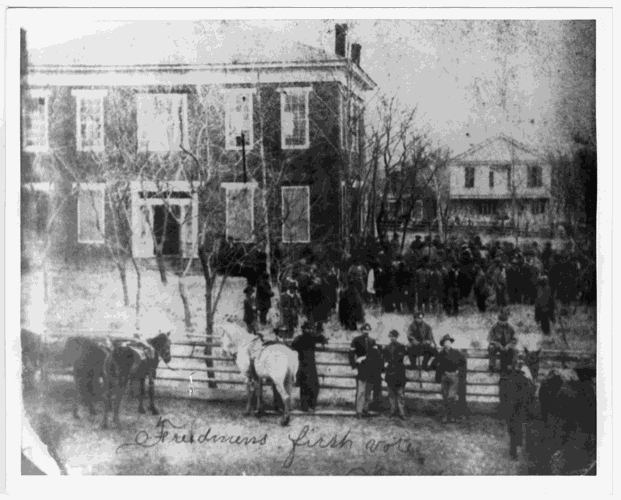
In 1868, more than 700,000 newly enfranchised Black men across the South cast their votes in support of Ulysses S. Grant. Sit with that. Ninety-seven years before the Voting Rights Act, Black men were exercising their right to vote, even before the 15th Amendment made their enfranchisement the law of the land.
Grant’s opponent, former New York Gov. Horatio Seymour, openly opposed Reconstruction-era policies and ran on the issue of restoring states’ rights. Grant won the presidential election by roughly 300,000 popular votes, with Black voters playing a significant role in his victory.
Those numbers matter. But so does what they required.
Black men and their families throughout the South faced terror, threats and the possibility of death as they registered to vote and exercised that right. In Texas, a formerly enslaved man cast what is recognized as the first vote by a Black Texan at the Anderson County Courthouse in Palestine during Reconstruction.
The 15th Amendment was ratified in 1870, prohibiting the denial of voting rights based on race, color or previous condition of servitude. Black men were subsequently elected to public office throughout the South.
It is easy to reduce that history to amendments, elections and numbers. What stands out to me is the determination required of Black communities to organize and exercise political power while the threat of having that power taken away was never far behind.
Texas offers its own example.
Norris Wright Cuney, the namesake of Houston’s Cuney Homes, became one of the most influential Black political figures in Texas history. A businessman and politician, Cuney served in several appointed positions and as an elected alderman in Galveston. But perhaps his most consequential role came as chairman of the Republican Party of Texas.
The Journey of the Black Vote: From Reconstruction to the Voting Rights Act
Cuney wielded real political power, and that power generated real resistance.
Some within his own party became increasingly concerned that Black leadership would alienate white voters, despite the party having previously supported and benefited from Black political participation. As factions worked to diminish the influence of Black leaders, Cuney gave the effort a name: the “Lily White Movement.”
The movement sought to push Black leadership out of the Republican Party and eventually spread beyond Texas. Cuney recognized what was happening for what it was: an effort to undermine Black political power.
Still, he organized.
The period became known as the “Cuney Era,” and records credit his efforts with helping register more than 100,000 Black voters during the final decade of his life.
The pattern is worth remembering.
Black political power was built. Resistance followed. And Black communities organized again.
Black women understood that fight intimately.
By 1896, Black women had helped establish the National Association of Colored Women, organizing around issues that included universal suffrage. The 15th Amendment had prohibited denying the vote on the basis of race, but it did not extend that protection on the basis of sex. Black women continued organizing for their own enfranchisement.
The ratification of the 19th Amendment in August 1920 was supposed to change that.
But a constitutional amendment did not make the barriers disappear.
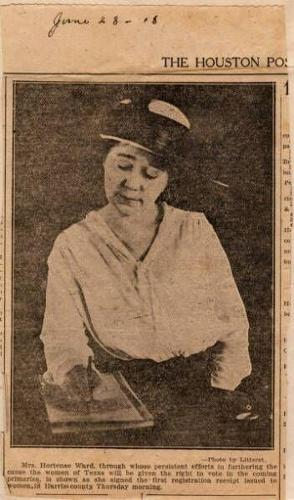
In Houston, Harris County officials planned to require women voting in the November presidential election to present poll tax receipts. The problem was obvious: the deadline to pay the poll tax had passed months before women gained the constitutional right to vote.
Hortense Ward was prepared to challenge it.
Ward, the first woman admitted to the Texas State Bar by examination and the first woman to register to vote in Harris County, sued county officials just days before the election, arguing that requiring women to produce a poll tax receipt violated their newly recognized voting rights.
The day before the election, a judge ruled against the poll tax receipt requirement in Harris County.
And on November 2, 1920, Black women showed up.
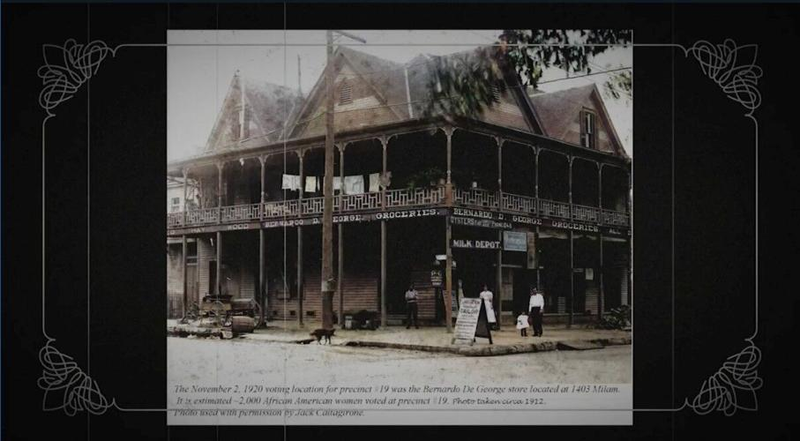
Houston newspapers reported that Black women voted in droves. They arrived in groups, many accompanied by Black men, and stood in line for hours. Many cast their ballots in Precinct 19 at the DeGeorge Grocery Store at Milam and Clay.
Of the roughly 14,000 women estimated to have voted in Harris County that day, more than 6,000 were Black women. Contemporary accounts suggested that nearly every eligible Black woman in Harris County cast a ballot.
Think about what that required.
For years, Black women had organized for a right they did not yet have. When that right was finally recognized, another barrier stood between them and the ballot. That barrier fell only one day before the election.
They showed up anyway.
And the barriers did not stop there.
In Houston’s Fifth Ward, Dr. Lonnie Smith, a dentist and community leader, challenged another mechanism used to deny Black Texans political power: the white primary.
Texas law allowed political parties to establish rules governing their primaries, and the Democratic Party excluded Black voters. Smith challenged that exclusion after he was denied the right to vote in a Democratic primary.
Represented by Thurgood Marshall, Smith ultimately took the fight to the U.S. Supreme Court. In 1944, the Court ruled in Smith v. Allwright that excluding Black voters from the Democratic primary violated the Equal Protection Clause of the 14th Amendment.
The ruling struck another barrier.
But look at the timeline.
Black men had exercised political power during Reconstruction. The 15th Amendment followed. Black leaders like Norris Wright Cuney organized and registered voters. Black women fought for enfranchisement and turned out in extraordinary numbers when the opportunity finally came. Lonnie Smith challenged the white primary and won before the highest court in the country.
And still, by the middle of the 20th century, Black Americans across the South faced literacy tests, poll taxes and other systems designed to keep them from the ballot.
Nearly a century after my ancestor registered to vote in Georgia, the federal government would once again have to act to protect a right Black Americans had already been fighting generations to exercise.
That brings us to 1965.
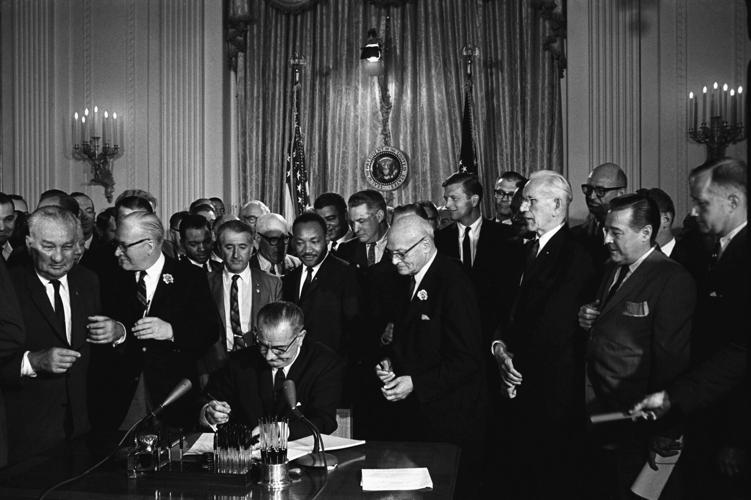
On August 6 of that year, President Lyndon B. Johnson signed the Voting Rights Act into law. The landmark legislation was designed to enforce the protections of the 15th Amendment and dismantle discriminatory practices that had long been used to suppress Black voters.
Among its most consequential provisions was federal oversight of jurisdictions with histories of voting discrimination. Under Section 5, those jurisdictions were required to receive federal approval, known as preclearance, before changing certain voting laws or practices.
The law was sweeping.
But history has shown us that voting rights won through legislation can also be weakened through legislation and the courts.
In 2013, the U.S. Supreme Court’s decision in Shelby County v. Holder struck down the coverage formula in Section 4(b) of the Voting Rights Act, effectively rendering the preclearance requirement in Section 5 unenforceable.
Section 2, which prohibits racial discrimination in voting practices, remained.
Then came 2026.
In Louisiana v. Callais, the Supreme Court ruled against Louisiana’s creation of a second majority-Black congressional district that had been drawn to address concerns about Black voter dilution.
The decision further weakened what remained of the Voting Rights Act’s ability to protect minority representation, particularly through the creation of majority-minority districts.
And once again, the pattern is familiar.
A right is recognized. Black political power grows. Resistance follows. The protections change. The fight begins again.
That cycle has followed Black voters from Reconstruction to Jim Crow, from the white primary to the Voting Rights Act, and from Shelby to Callais.
It is crazy to think that my ancestor registered to vote 111 years before I was born, yet many in the generations between us either did not have that same access to the ballot or faced extraordinary obstacles when they tried to exercise it.
Some faced the threat of death.
That is why this history matters now.
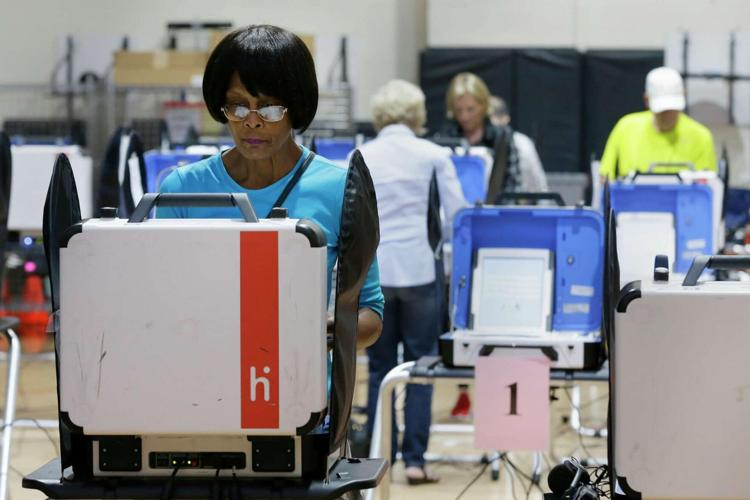
As Texas heads toward another election, the question is not simply whether Black Texans have the legal right to vote. Our history has already taught us that having a right on paper and having the power to exercise it are not always the same thing.
The Black men who voted in 1868 understood that.
The Black women who stood in line in Houston in 1920 understood that.
Norris Wright Cuney understood it. Hortense Ward understood it. Dr. Lonnie Smith understood it.
And generations later, we should understand it too.
The journey toward equality through legislation has never been a straight line. Black Americans have gained political power, confronted efforts to restrict it and organized to reclaim it again and again.
That history is also shaping the political conversation in Texas today.
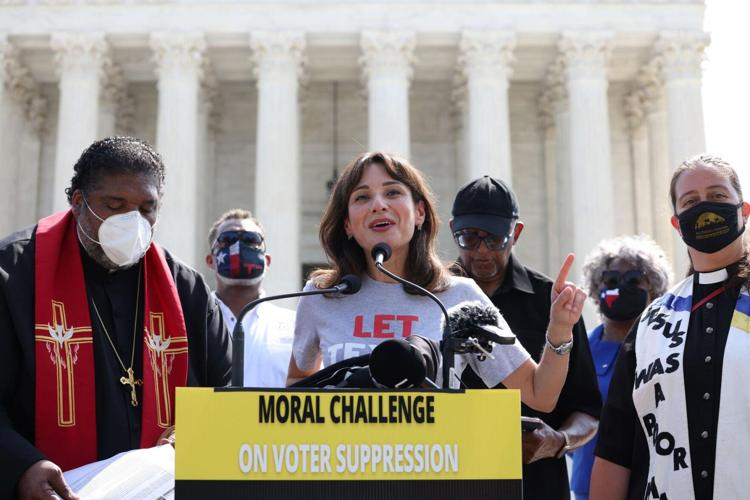
At an August 5 Voting Rights Act observance in Houston, Texas gubernatorial candidate Gina Hinojosa warned that “the fate of the Union depends on Texas.”
“When an election is decided before a single ballot is cast, no matter which party you belong to, we all lose,” Hinojosa said. “We are no longer America. But a rigged map still has to make its way to the governor’s desk. That makes this office the last line standing between one party and permanent control of Congress, and it makes this race the most important in America.”
She’s right. She’s right about what she said, and I believe she is right for Texas.
On November 3, 2026, Texas voters will decide.
And because of the patterns and lessons of our history in this state and nation, I believe Black voter turnout may once again help settle the next chapter of our democracy, just as it did when those newly enfranchised Black men cast their ballots in 1868.
Juli McShay is a government professor at San Jacinto College specializing in constitutional law, civics, and voting rights. She is the founder of the Houston Civics & Leadership Campaign School, host of the Pretty Petty Politics podcast, and a Political Contributor for Forward Times.

