By VP Wright
Forward Times
https://www.forwardtimes.com/
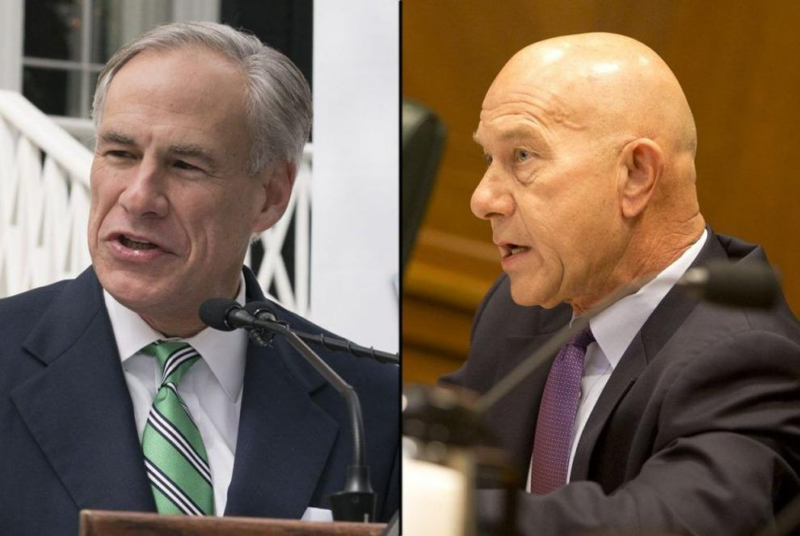
Mayor John Whitmire’s reversal on the ICE ordinance isn’t just a policy flip, it’s a leadership failure in a city that can’t afford one.
I grew up in the shadow of a name that meant something in this city. Kathy Whitmire served as Houston’s mayor for a decade, from 1982 to 1992, and her legacy as a trailblazer is woven into how many Houstonians understand what it means to lead with conviction.
I came of age watching Annise Parker’s historic tenure and then bore witness to the years of Sylvester Turner—a man who walked the line between political reality and the needs of a growing, diverse city with a kind of steady resolve. These are the mayors that shaped my understanding of what the office can be.
So it is with deep and personal sadness that I sit here, in April 2026, watching Mayor John Whitmire fold and operate as if he has no trust in the leaders Houston elected.
Let’s walk through what happened, because the sequence matters:
City Council Member Alejandra Salinas, along with Council Members Abbie Kamin and Edward Pollard, introduced a Proposition A ordinance aimed at clarifying the Houston Police Department’s role in federal immigration enforcement. The ordinance—born out of a city living in very real fear—was designed to ensure that routine traffic stops end when their lawful purpose is complete, that HPD is not required to contact ICE beyond what state law mandates, and that transparency measures be put in place so Houston residents could see how their local law enforcement was engaging with federal agents.
It was not radical. It was a clarification.
And even in its clarified form, it came to Council already compromised. The City Legal Department had stripped a key provision that would have directly addressed when HPD is required to contact ICE for civil administrative warrants. What remained was a narrowed, revised, deliberately measured version of what was originally proposed.
Mayor Whitmire voted for that version.
Then Governor Greg Abbott threatened to pull $110 million in public safety funding—money meant for police, firefighters, and emergency responders—if Houston didn’t reverse course.
And Mayor Whitmire reversed course.
What followed was perhaps more troubling than the reversal itself. The mayor reportedly declared that the only legal opinion that matters is the governor’s.
Not the council members who crafted the policy. Not the City Attorney’s legal review. Not the 50-plus organizations that stood behind this ordinance because they understood what was at stake for their communities. The governor’s.
That statement should give every single Houstonian pause.
What’s even more disappointing is that the mayor was willing to turn his back on Houston’s most vulnerable community members: immigrants who have resided here for years, putting in countless hours of work, paying thousands in taxes they will never receive refunds on, and contributing to our city with nothing but hope that they may one day gain citizenship and the right to vote.
Our mayor is supposed to stand up for all Houstonians, not just the ones with wealth and power.
We are the fourth-largest city in the United States. We are the most ethnically diverse major city in the country. We are a city that is hosting one of the largest global events on the world stage in just a few short months. We are a city that presents itself to the world as a beacon of what America’s future looks like. And yet, our mayor could not hold the line on a revised, legally reviewed, deliberately compromised ordinance meant to protect the very communities that built this city’s culture, its cuisine, its music, its art, and its labor.
This is not a new pattern, either. It would be one thing if this were an isolated stumble. But it isn’t.
In 2024, as Houston faced a projected $187 million budget deficit—the largest in the city’s history—the administration’s first move was to cut funding for public art. While Houston Arts Alliance CEO John Abodeely argued that a modest investment in the arts is a powerful investment in Houston’s brand, the city quietly began chipping away at the cultural infrastructure that makes this place worth living in. This was just one of many programs cut in an effort to reduce the deficit.
We are still broke. The deficit hasn’t disappeared. And now, in 2026, we face the same fiscal reckoning without a clear, courageous plan for how we get out of it.
Leadership requires more than surviving the news cycle. It requires vision. It requires the willingness to take a principled stand even when pressure comes from above. And it requires understanding that when you govern a city as complex and consequential as Houston, the people watching you are not just the governor and the statehouse. They are the parents choosing whether it’s safe to drive their children to school. They are domestic violence survivors calculating whether calling 911 comes with consequences they can’t afford. They are the artists who just watched their city defund the very culture that draws global attention to Houston in the first place.
I have been watching mayors across the country step into leading their cities through this moment with confidence.
Zohran Mamdani in New York is leading the city through historic efforts: free childcare, immediate infrastructure repair, and taxing the wealthy to fund public services—all while drawing on Obama-era energy in the way he communicates directly with constituents on social media, meeting people where they are and showing up with transparency and urgency.
He is not alone. Across the country, a new generation of local leaders is emerging—leaders who understand that their power lies not in appeasing the state or the Trump administration, but in being unshakably accountable to the people who elected them.
Houston deserves that kind of leadership. Not performance. Not posturing. Not a mayor who tells his constituents that only the governor’s opinion matters.
We deserve someone who understands that this city’s diversity is not a talking point—it is the whole point. Someone who can stand in the tension between state pressure and community need and choose the community every time.
I will be watching the 2027 mayoral race with deep intent and a whole lot of curiosity. Houston has produced transformative leaders before. It can again. But right now, in this moment, we need to be honest with each other: what we have is not working, and we cannot afford to wait until it all falls apart to say so.
The city is watching. The communities most impacted are watching. And come November 2027, the voters will have their say.