By Terry Allen
Texas Metro News
https://texasmetronews.com

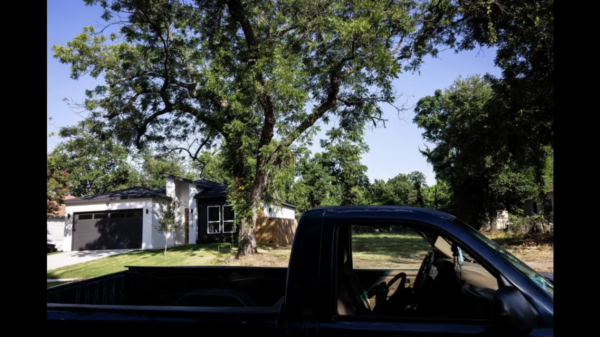
Credit: Terry Allen

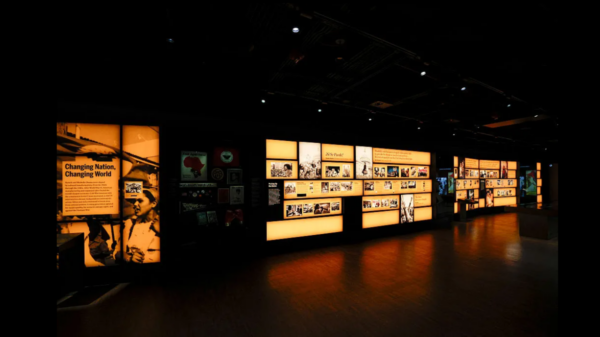
Credit: The National
Womens History Museum
Big Mama sat at that kitchen table like she always did—coffee strong, eyes sharper than anything on the evening news. She didn’t need headlines to know what was going on. She could feel it.
“Baby,” she said, “anytime folks start arguing over what can be taught, shown, or even painted… it ain’t about confusion. It’s about control.”
I remember Lucille ‘Big Mama’ Allen telling me that as we rode through Dallas one afternoon, in her Jubilee Park, neighborhood slowing at a crosswalk that wasn’t just stripes on concrete—it was culture, color, identity. She looked out the window and said, “That right there? That’s somebody saying ‘we were here.’ And don’t you ever let nobody paint over your ‘we.’”
Years later, I watched the same kind of tension play out on a bigger stage. Conversations around institutions like the Smithsonian Institution started shifting—what gets highlighted, what gets softened, what gets left out. And I could hear Big Mama again: “If they start editing the story, you better ask who benefits from the revision.”
She didn’t speak in policy terms. She spoke in truth.
She’d remind me that history wasn’t something you visit—it’s something you carry. “It ain’t locked up in no building,” she’d say. “It’s in how you walk, how you talk, what you pass down when nobody’s watching.”
That’s why she made sure we knew our story in full. Not just the pain, but the power. Not just what we survived, but what we built. She refused to let our history be reduced to moments when we were counted out—because she knew we had always been the ones who counted.
And then she’d lean in, real quiet, like she was handing you something sacred: “If you don’t tell your story, somebody else will… and they won’t tell it like you lived it.”
That wasn’t fear talking. That was responsibility.
Because today, it’s not always loud erasure. Sometimes it’s subtle. A chapter shortened. A contribution minimized. A symbol debated until it disappears. But make no mistake—the impact is the same.
And if Big Mama were still here, she wouldn’t be marching first—she’d be teaching. Correcting. Reminding. Making sure the next generation knew enough truth that no version of history could confuse them. Just like Shirley Chisholm—because she refused to let anyone define her narrative, standing “unbought and unbossed” in spaces that weren’t built for her, and ensuring history had no choice but to include her voice.
Big Mama said, “You don’t fight erasure by arguing; you fight it by remembering out loud.””
And that’s the charge.
Not just to protect history—but to live it so boldly, so clearly, that nobody can deny it.
Because that’s not just legacy. That’s survival with purpose. Email me at TerryAllenpr@gmail.com and share your history with us.
Terry Allen is an NABJ award-winning Journalist, DEI expert, PR professional, and founder of the charity – Vice President at FocusPR, Founder of City Men Cook, and Dallas Chapter President of NBPRS.org