By Ashlee Banks
Afro
https://afro.com/
Members of the House of Representatives reinforced the expansive authorities of the executive branch, rejecting high-profile measures to curb presidential war powers and increase transparency regarding sexual harassment within the halls of government.
On March 5, the Republican-led House narrowly defeated a War Powers Resolution introduced by Reps. Ro Khanna (D-Calif.-17) and Thomas Massie (R- Ky.-4). The 212-219 vote followed a similar failure in the U.S. Senate, effectively granting President Donald Trump a green light to continue military strikes against Iranian targets without seeking new authorization from Congress. The resolution was designed to invoke the War Powers Act of 1973, which requires a president to withdraw forces from hostilities within 60 days unless Congress declares war.
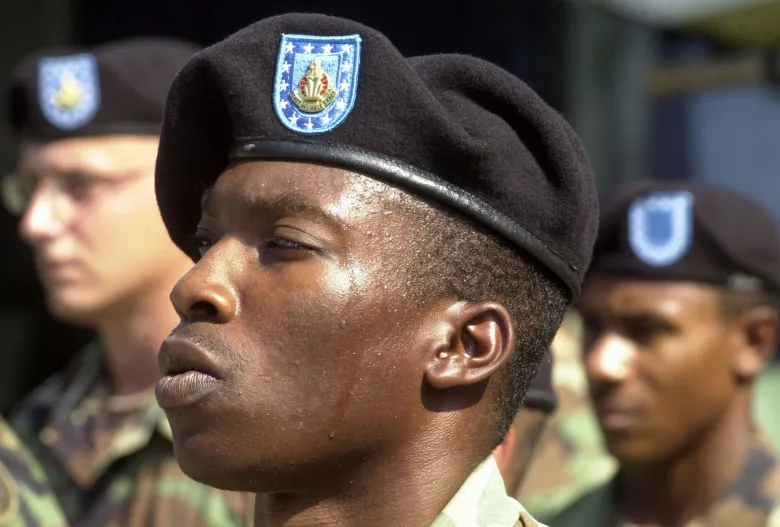
This legislative decision carries profound implications for Black Americans, as the human and economic costs of military engagement fall disproportionately on a community that is overrepresented in the armed forces. According to the Department of Defense and the U.S. Census Bureau, Black Americans make up approximately 14 percent of the U.S. population but comprise 21.4 percent of the Army, 19.1 percent of the Navy, and 15.8 percent of the Air Force.
Rep. Khanna told the AFRO that he introduced the measure because the war is costing taxpayers “a billion dollars a day.”
“The war has taken the lives of six U.S. service members; the U.S. command says that we are going to be in this war until September,” said the California lawmaker. “The American people are tired of the war in the Middle East, they want our focus here at home.”
For Black service members, the “green light” for continued strikes translates into a higher statistical likelihood of deployment. If the administration decides to send troops to Iran, the impact would be concentrated in the Army, where Black representation is at its highest.
Furthermore, the transition home remains difficult as the unemployment rate for Black veterans reached 8.3 percent in early 2026, significantly higher than the 4.5 percent rate for veterans overall, according to the Bureau of Labor Statistics.
More broadly, the financial burden of the war in Iran hits Black American households disproportionately due to the racial wealth gap.
Rep. Glenn Ivey (D-Md.-4) previously told the AFRO that federal funds are prioritized for overseas conflicts rather than for domestic investments.
“[War] diverts a lot of money that could be used to pay for the healthcare tax credit extension and Medicaid,” said Ivey.
While House Democrats overwhelmingly supported the measure, four members – U.S. Reps. Henry Cuellar (D-Texas-28), Jared Golden (D-Maine-2), Greg Landsman (D-Ohio-1), and Juan Vargas (D-Calif.-52) – broke ranks to vote against it.
Conversely, only two Republicans, Reps. Warren Davidson (R-Ohio-8) and Massie, joined the Democratic minority.
U.S. Rep. Gabe Amo (D-R.I.-1) told the AFRO that he voted for the measure because the Constitution requires that Congress be involved in any action that is destabilizing a region.
“[This war] is putting people in harm’s way,” added the Democratic lawmaker.
U.S. Rep. Sydney Kamlager-Dove (D-Calif.-30) told the AFRO she voted in favor of the War Powers Resolution to “reclaim her power.”
“We [Congress] are the only entity, branch in this government that can authorize a war and that is because we hold hearings and talk about what’s happening,” said the California congresswoman. “We need to be able to make the case to the American people about why we should be sending their sisters and brothers, mothers and fathers into war.”
Simultaneously, the House moved to block an attempt by Rep. Nancy Mace (R-S.C.-1) to force the disclosure of sexual harassment claims against lawmakers. Mace’s resolution sought to release records of cases where members of Congress used taxpayer-funded settlements or engaged in relationships with subordinates. The push followed recent reports involving U.S. Rep. Tony Gonzales (R-Texas-23), who admitted to a sexual relationship with a staffer who later died by suicide.
The House voted 357-65 to refer Mace’s resolution to the Ethics Committee, a move widely viewed as a method to quietly kill the legislation. Ethics Chair Michael Guest and Ranking Member Mark DeSaulnier issued a joint statement warning that publicizing such records would chill victim cooperation and lead to re-traumatization. Mace blasted the decision, accusing both parties of colluding to protect the establishment rather than the victims.
Rep. Shontel Brown (D-Ohio-11) told the AFRO that she voted for the measure.
“We need to address the reckless behavior that continues to happen and hold people accountable,” said the Ohio Democrat. “Accountability, transparency … it’s the job we signed up for, it’s public service.”
Despite the floor defeat, Mace secured a partial victory in the House Oversight Committee through a compromise with U.S. Rep. Robert Garcia (D-Calif.-42). The committee successfully subpoenaed the Office of Congressional Workplace Rights to compel the release of records regarding sexual harassment awards and settlements involving members of Congress prior to 2018. However, the subpoena allows for redactions to protect the identities of victims and witnesses, tempering the full transparency Mace had originally sought.
The House’s rejection of these two measures maintains existing executive authority over military strikes and keeps the management of internal ethics records within the current committee structure.
Despite what some Democrats see as a setback, Black lawmakers have stated that they will continue to push for transparency regarding the economic and human costs of war and the accountability of elected officials.