By Rita Cook
Correspondent
Texas Metro News

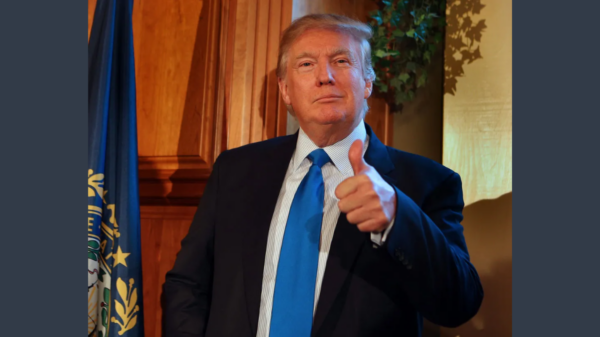
WASHINGTON DC – President Donald Trump signed an executive order last week “modifying the scope of the reciprocal tariff with respect to certain agricultural products.”
In short, this means he has rolled back dozens of tariffs on specific food products.
This particular Executive Order piggybacks off EO #14257 from April 2, 2025 regulating imports with a reciprocal tariff to rectify trade practices that contribute to large and persistent annual United States goods trade deficits and EO #14346 from September 5, 2025 modifying the scope of reciprocal tariffs and establishing procedures for implementing trade and security agreements.
This latest EO will now allow for food products such as coffee, tea, bananas, oranges, tomatoes, fruit juices, spices, nuts, grains, and even beef, to escape tariffs.
Beef had become a real struggle for many families at the grocery store due to the U.S. imposed tariffs that affected strong U.S. beef suppliers in Brazil, Australia, New Zealand and Uruguay. Brazil was seeing tariff rates up to 75%.
In part too was the fact cattle herds in the U.S. has been at a 75-year low due to ranchers dealing with rebuilding herbs due to rising feed costs, drought, and tariffs on fertilizer, steel and aluminum, making the entire beef production in the U.S. more expensive.
In September the Bureau of Labor Statistics said uncooked beef products had risen in price from 12% to 18% year over year.
Ground roast coffee prices according to the Bureau of Labor Statistics had also reached $8.41 per pound in July, which was a 33% increase from last year.
The tariffs had not only affected Brazilian coffee suppliers, which was a third of U.S. import, with a 50% tariff increase, but also Vietnam, and Colombia products.
Other items on the White House list of exemptions include some fertilizers and food products used for religious purposes.
In all there are 237 classifications and eleven categories of agricultural products now exempt from these reciprocal tariffs.
The Trump administration pointed out these items cannot be domestically produced in adequate amounts.
It was also pointed out in a fact sheet following the trade deal announcement “The President has announced Agreements on Reciprocal Trade with Malaysia and Cambodia, and Joint Statements on Frameworks for such agreements with El Salvador, Argentina, Ecuador, and Guatemala; Thailand and Vietnam; the United Kingdom and European Union, and Switzerland; as well as investment deals with Japan and Korea. The President has also made significant progress on reciprocal trade negotiations with many other countries around the world.”
When the tariffs were originally implemented Pres. Trump had said the move would not lead to higher prices for US consumers.
That proved to be inaccurate as prices increased at grocery stores.
Trump told reporters last week he did not believe more policy rollbacks would be necessary in the future.
“We just did a little bit of a rollback on some foods, like coffee as an example, where the prices of coffee were a little bit high. Now they’ll be on the low side in a very short period of time,” he said. The tariff exemptions for food products took effect Thursday, November 13 according to the White House.