By Voza Rivers
Minnesota Spokesman-Recorder
https://spokesman-recorder.com/
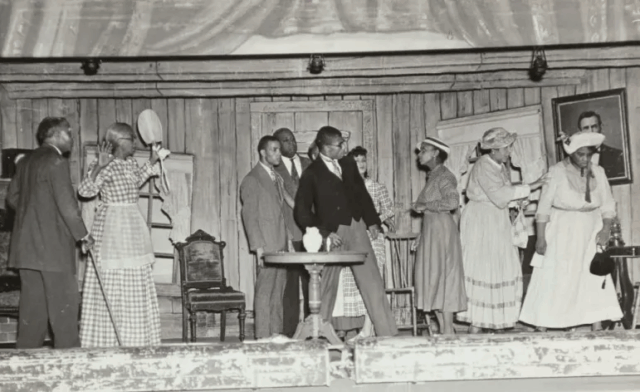
In September, visitors who walked through Lincoln Center’s new exhibition, “Syncopated Stages: Black Disruptions to the Great White Way,” encountered more than theatrical memorabilia; they witnessed proof of an unbroken artistic resistance spanning two centuries.
From the African Grove Theater, founded in 1821 by William Alexander Brown in New York City, to today’s Broadway, Black artists have continually transformed American theater, even when the nation tried to silence them. Their resilience is not just a testament to artistry but to endurance
It lives on in the exhibition curated by the late Michael Dinwiddie, who passed on July 4. Opening this fall, “Syncopated Stages” arrives as nonprofit theaters, especially those led by artists of color, face mounting challenges. Its timing feels intentional: Black theater has always emerged from struggle, transforming limitation into liberation.
“Black theater has always emerged from struggle, transforming limitation into liberation.”
The arts prevail
The arts have long risen from hardship: the Harlem Renaissance, the Civil Rights Movement, and now a new era of cultural reckoning. As divisions deepen, we are again called to defend the power of the arts and protect the spaces where Black creativity thrives.
Our story begins with the African Grove Theatre, the nation’s first Black theater company. It nurtured pioneers like Ira Aldridge, who became one of the world’s greatest Shakespearean actors. Their stage was not just entertainment, it was defiance.
That lineage runs through Harlem’s New Heritage Theatre Group, founded by my mentor Roger Furman in 1964; and through Karamu House in Cleveland, the oldest African American theater in the country, still thriving under Tony Sias. These institutions carried a radical idea: that theater could reflect the truth of Black life, inspire civic change, and build community.
Furman once said, “Every other day I receive a notification about a play being produced, many of them supported by churches and community centers rather than traditional funders.” He said this in the 1960s, but his words remain urgent today. Our cultural spaces still fight for basic survival, even as they remain vital to our collective spirit.
Creating space, shaping legacy
Following Furman’s lead, a wave of Black arts movements flourished: Woodie King Jr.’s New Federal Theatre, Barbara Ann Teer’s National Black Theatre, Ernie McClintock’s Afro-American Studio, the Negro Ensemble Company, Freedom Theatre in Philadelphia, ETA in Chicago, and Penumbra Theatre in St. Paul.
Alongside them, Hispanic theaters like Pregones and the Puerto Rican Traveling Theater expanded the mosaic of storytelling. These spaces became homes for artists Broadway once rejected, yet from them came the very artists who redefined it.
The connection between these pioneers is deep. Eulalie Spence, a Harlem Renaissance playwright, mentored Joseph Papp, who later founded The Public Theater, one of America’s most influential incubators. Papp, in turn, supported New Heritage. This is how our movement has always endured: through mentorship, solidarity, and the passing of torches.
Today, as theaters led by people of color confront funding shortages and cultural erasure, our charge is clear. The arts heal, educate and activate. They remind us who we are. “Syncopated Stages” underscores this legacy, that Black artistry has always been about perseverance, visibility and community.
This is not just a Harlem story. It is an American story, one of artists who refused to disappear, who turned struggle into song, and who made the stage a sanctuary for our collective voice. As long as there are stories to tell, the curtains will rise, on our watch.
This commentary was originally published in Word in Black. It has been edited for length. For more information, visit www.wordinblack.com.