By Ronny Banks
The Triangle
https://www.thetriangle.org/
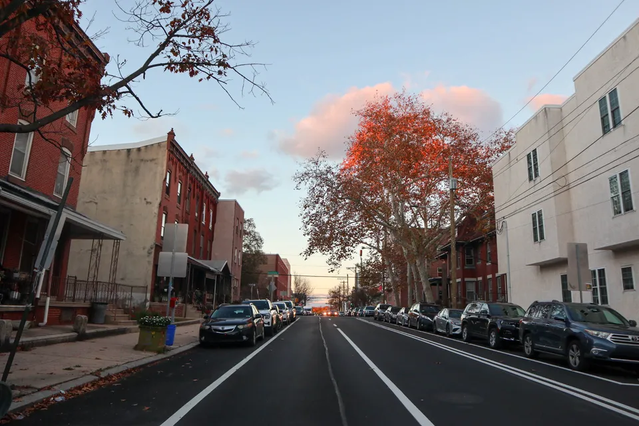
Last month, Charmira and Quincy Pilgrim officially became homeowners and scored a $315,000 house right here in West Oak Lane. We were not surprised to learn the Pilgrims had a difficult hump to get over before getting the keys.
In Philadelphia’s housing market, first-time home buyers face brutal prices, sellers, and tons of rejection. The Pilgrims had the credit score and income. What they did not have was the down payment, a common dread facing many first-time buyers. However, the Pilgrims were not going down without a fight. “I didn’t have the $10,000 that I needed for the closing, and it was crunch time,” Pilgrim told 6abc News.
According to Philadelphia Today, The Green Street Friends Meeting, a Quaker congregation in Germantown, Philadelphia, has committed $50,000 annually for 10 years to a racial justice and reparations initiative. The grants help tackle the heavy closing costs from processing fees to down payments; you name it.
For Black families in Philadelphia, the path to homeownership can involve more than finding a dream home. Generations of housing discrimination and unequal access to the financial resources needed to build inherited wealth have contributed to a racial gap and larger systemic exclusion. According to a National Association of Realtors report, there has been a significant gap, with white home ownership at 72 percent and Black home ownership at 44 percent, more than a 30 percent gap.
The post-WWII era served as the groundwork for this systemic exclusion. The GI Bill offered subsidized mortgages to veterans. However, this form of government generosity did not apply to the Black veterans due to “restrictive covenants” which often dictated that realtors sell to “white members only,” according to the historical project Segregation by Design.
Today, the city’s Black population suffers from those 90 years of racist, unjust housing policies. “Parents of Black renters are less likely to own a home than their white counterparts, meaning they’re unable to extract equity to help their children with a down payment,” senior economist Orphe Divounguy told WHYY.
Community reparations from local organizations can break down financial barriers and the overarching impact of redlining for Black families. According to a report by Philadelphia Yearly Meeting, committee members noted that the initiative is “just a beginning,” expressing hope that others who learn of the project will “feel called to support” the effort.
Many home buyers underestimate the hidden costs that these community reparations grants are designed to cover. “Closing costs come with unexpected price tags like appraisal costs, taxes, mandatory insurance, and recording fees,” said Jarel Wilson, a real estate agent with Century 21 Gold Advantage. Wilson noted that community reparations are extremely crucial to help offset routine fees that are five percent to seven percent of a home’s total price.
Local organizers understand that community-led funds are not a permanent solution, yet they remain committed to creating tangible change on a personal level. “We knew these grants wouldn’t undo generations of discrimination,” Rebecca L. Grant, Green Street Committee reparations Member, told the Philadelphia Inquirer. “but we thought we could make a difference one family at a time.”
Launched in 2021, the Green Street reparations project pledged $50,000 a year for a decade, partnering with the nonprofit birdSEED to provide homebuying assistance to first-time Black buyers, Philadelphia Today reported.
Ultimately, while systemic issues in Black neighborhoods demand more policy and market reforms, community-based financial ventures will give Black families a sense of equity. When neighbors, faith groups, and local organizations step up to bridge financial gaps, they directly challenge decades of redlining and systemic exclusion. Consistent community investment can be the catalyst to generate real wealth-building results, placing homeownership well within reach for Black families.