

Shamond Lewis was comatose hours after guards restrained him away from cameras. Qualified immunity granted to an officer ended his mother’s excessive force case.
By Tracey McManus
Dallas Morning News
https://www.dallasnews.com/
A hallway camera shows officers walking Shamond Lewis into a changing room at the Dallas County jail and disappearing from view. About 12 minutes later they roll him out strapped to a restraint chair.
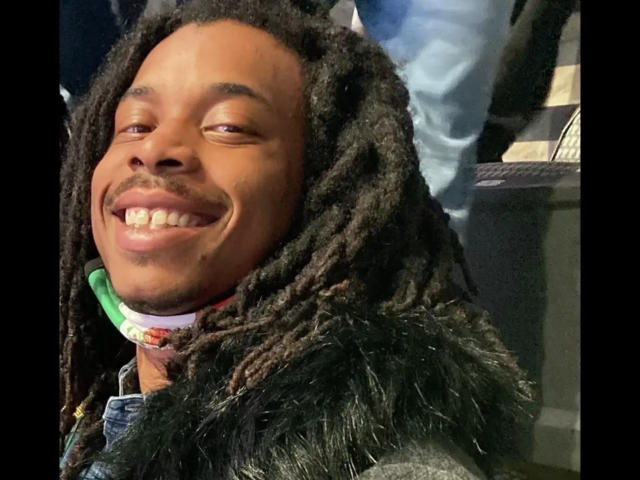
Lewis was comatose within hours and died six days later.
Officers said the 24-year-old refused to get into a jail uniform Sept. 23, 2022, but no camera captured how the struggle unfolded inside.
When nobody was criminally charged for her son’s death, Sophia Lewis hoped her federal excessive force lawsuit would be a path to accountability.
A detention officer told investigators he saw a female colleague step on Lewis’ legs like a surfboard while he was screaming and being held face-down on the ground.
Officer Annette Grant denied stepping on Lewis. But even if she had, a federal appeals court in February ruled, she would be protected by qualified immunity — a controversial legal doctrine that shields officials from liability in many police brutality cases.
Unable to afford a U.S. Supreme Court appeal, Sophia Lewis said she had no choice but to end her three-year legal battle against Dallas County on Tuesday. With no discussion, the Commissioners Court approved the settlement amount: $15,000.
“It was never about money, it was about taking accountability,” Sophia Lewis said. “I was left with nothing because my son is dead and people are still dying at Lew Sterrett under their custody and they don’t care.”
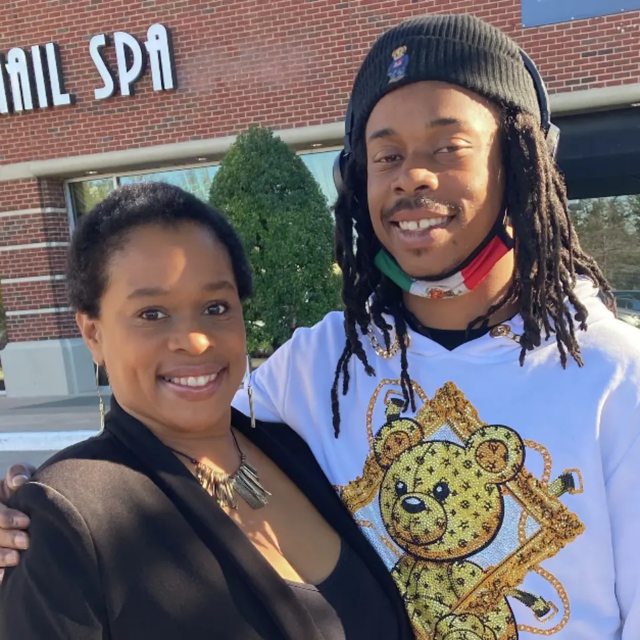
Shamond Lewis had paranoid schizophrenia and was in a mental health crisis when he struggled with guards before his death, according to court filings.
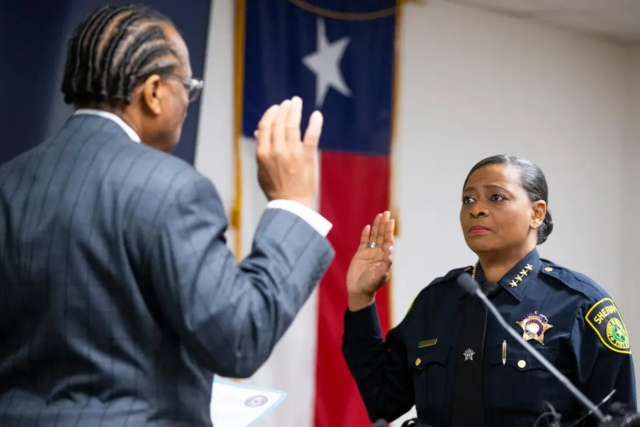
Sheriff Marian Brown did not respond to requests for comment about his death or the settlement, including whether she has changed policies for restraining people with mental illness.
Lewis is one of 71 incarcerated people who died from 2018 through 2025, Brown’s first eight years in office. Half had received public mental health treatment in the three years before they died, according to data provided by Texas Commission on Jail Standards.
Undetermined death
Lewis struggled in his early 20s as his diagnosed schizophrenia took hold, his mother said. Arrests for marijuana possession, trespass and assault led to stints in jail and psychiatric hospitals.
But things were turning around for Lewis, his mother said. He lived alone, was supporting himself and stayed close with family.
Then on Sept. 22, 2022, Lewis was arrested by Dallas police for aggravated assault after allegedly striking a man during an altercation near a bus stop in southeast Dallas, according to the lawsuit.
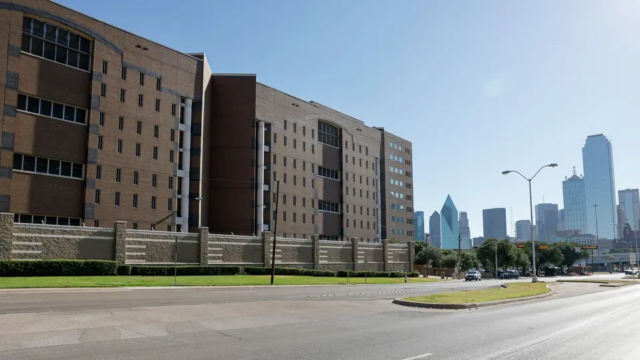
During booking at the Lew Sterrett Justice Center, officers knew of Lewis’ mental illness and placed him on suicide watch, the complaint states.
After midnight on Sept. 23, 2022, three jailers walked Lewis toward the changing room, according to an officer’s memo. Video shows him resisting before officers escort him inside and out of view of the hallway camera, according to a Tarrant County detective assigned by the state to investigate.
A struggle ensued as they tried to handcuff Lewis and he curled into a ball, one officer wrote in a memo. Another stated the group then struggled to handcuff Lewis before they cut off his clothes to put on the uniform, according to an interview transcript. Six guards responded to assist — one with a restraint chair.
They exited the room 12 minutes later at 12:55 a.m. with Lewis appearing “disoriented as his head sways from side to side” in the restraint chair, the detective wrote.
Officers took Lewis to a jail clinic where medical staff performed CPR, court records state. He was transported to Parkland Hospital at 1:45 a.m. and was comatose that day.
In hospital records, doctors noted Lewis likely suffered a brain injury from lack of oxygen.
He was declared brain dead and died six days later.
The medical examiner found extreme brain swelling and severe muscle breakdown that can occur after intense exertion, according to the autopsy.
But because the medical examiner did not have a full toxicology or video showing how officers restrained Lewis, he did not conclude whether the death was an accident, homicide or medical event. The cause and manner of death were undetermined.
‘No accountability’
Sophia Lewis’ lawsuit accused six officers of excessive force or failing to intervene. But her lawyers saw Grant as most culpable, said attorney Stephen Pipkin, who co-represented Sophia Lewis with the Clark Von Plonski Anderson law firm.
So when the district judge and then appellate court ruled Grant had qualified immunity, “it basically just robbed us from having a case,” Pipkin said.
Qualified immunity is a doctrine created by the Supreme Court in 1967 and expanded over decades that requires plaintiffs in police brutality and misconduct cases to prove two elements: that defendants acted illegally and also should have known they were violating “clearly established” law because a prior court case had found near-identical conduct to be unconstitutional.
A detention officer told Tarrant County investigators Grant stood on Lewis’ legs and above his buttock area while other guards tried to control the 178-pound 24-year-old.
Grant, who could not be reached for comment through her attorney, denied stepping on Lewis. Investigators noted she gave changing accounts in interviews: first saying she sat on the back of Lewis’ legs to keep him from kicking, then saying she straddled his legs.
Sophia Lewis’ attorneys cited federal court rulings where police had been denied qualified immunity: an officer who put a man in a neck hold while another sat on his chest before he suffocated; officers who used body weight on detainees before tasing them; an officer who slammed a woman’s face into a car while she was handcuffed.
The appellate court in February ruled those cases didn’t match Grant’s circumstances and would not have put her on notice that standing on Lewis’ legs while the officers tried to handcuff him would be an unreasonable use of force.
“It’s so literal,” Pipkin said of qualified immunity. “They can technically just say there’s no evidence to know their actions were illegal.”
Supporters say the legal protection is necessary to allow law enforcement and other government officials to do their jobs without fear of civil consequences.
The doctrine has long been viewed by critics as giving police free rein to kill people.
“There’s no accountability until the law changes,” Pipkin said.
No apology
To Sophia Lewis it felt like her son’s life was repeatedly violated. She said the sheriff’s office never told her that her son was comatose in the hospital — a Parkland nurse called her three days after he arrived.
Her son’s death led to her own mental health struggles as she grappled with grief and guilt. Nobody from the county has ever offered an apology for her son’s death, she said.
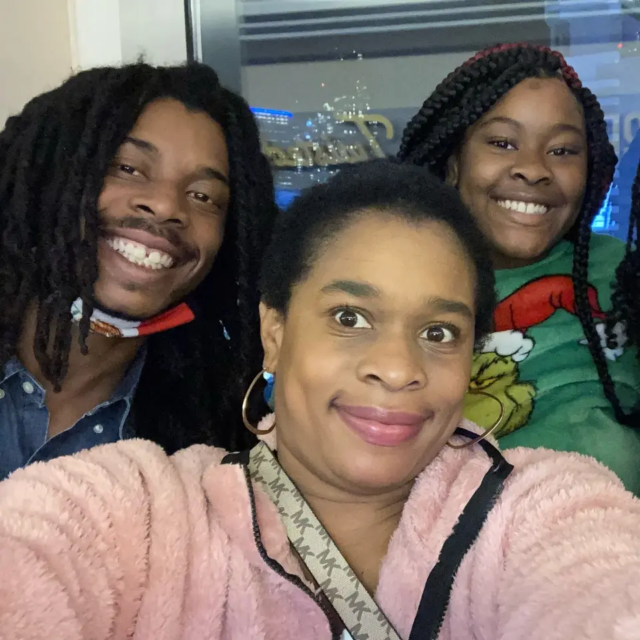
“We’ll never get over this, but we learn to cope,” she said. “No one deserves to die like that, especially when there is a uniform saying we’re there to protect and serve.”
According to state licensing records, all six officers named in the lawsuit are still employed with the sheriff’s office except for Grant, who left in 2024. Brown, the sheriff, did not answer whether Grant resigned or was fired.
Pipkin said the jailers who knew about Lewis’ mental health history should have called for the jail’s psychiatric staff when he refused to put on the jail uniform.
Sophia Lewis thinks every day how things may have turned out differently.
Dallas County Reporter
Tracey McManus joined The Dallas Morning News in October 2024 and covers Dallas County government. She previously spent nine years as a reporter for the Tampa Bay Times in Florida and five years as a reporter for The Augusta Chronicle in Georgia. Tracey is a graduate of the University of Florida with degrees in journalism and Spanish.

