

The new zoning aims to welcome development while protecting the area’s unique character.
By Aria Jones
Dallas Morning News
https://www.dallasnews.com/
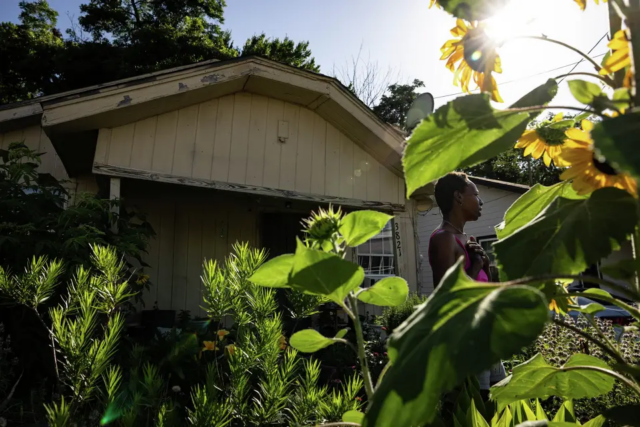
New zoning for more than 3,300 acres in South Dallas, a continuation of a wide-ranging community vision, got the green light from Dallas City Council on Wednesday night.
It’s part of a plan aiming to embrace needed growth while preserving the area’s unique history and protecting the cultural identity that sets the area apart.
The rezoning implements that plan, creating enforceable policy and driving growth to corridors like Martin Luther King Jr. Boulevard or South Fitzhugh Avenue. It codifies design standards for residential areas and re-maps which areas have what uses. It’ll mainly impact future development, not existing structures.
Community members are grappling with what the growing attention could bring. Some said they were unaware of the zoning changes and other plans. The South Dallas area has seen its median estimated home value increase in recent years. It went up from about $165,000 in 2022 to nearly $221,000 in 2025, according to the area’s land-use plan.
Vacant lots that residents say once attracted loiterers or dumping now anchor gleaming contemporary houses. Some are concerned about the gentrification and displacement that come with the growth, and some have said development may finally offer an answer to persistent blight and historic underinvestment.
Neighbor watches change
Across from the newly remade Park South YMCA, Angella Martin can point down her block, where she’s lived for about 10 years, and show where it’s already transformed.
One family lived in a house for decades, she said, but the change became too much and they moved out. The area, rich with African American history, is losing a voice as the area is gentrified and demographics shift, she said.
“I don’t really have too much of a problem with it,” Martin said. “At the same time, I would love to see some of that stuff stay because it has meaning and value.”
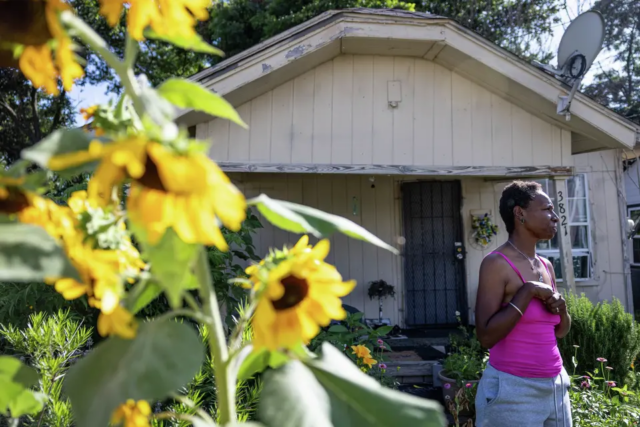
Some homes have peeling paint or are worse for wear. Martin’s home, which she’s thinking about remodeling, was built in 1926, online appraisal district records show. She doesn’t want to change the frame, but would update the inside.
Her front yard, a garden full of tall sunflowers, herbs and vegetables, stands out. A few houses down, a tall contemporary home, vastly different from her own, casts a shadow.
Martin said the new houses are nice, and she likes her neighbors, but the overall trend of growth and change points to affordability issues that need a clear solution.
“You keep building unaffordable Dr. Seuss houses,” Martin said, adding, “I understand things are changing, but I’m not seeing the growth in income. If it’s not a balance, then it’s just setting people up for failure.”
Transplant tries finding balance
Jessica Jolly, who moved to North Texas in 2021, eventually chose South Dallas as her new home.
She was working at a clinic there and living in Las Colinas. That commute became too much, and with her passion for the community, she was drawn to the neighborhood’s Black history and its character. Jolly said she found a builder, picked her lot and eventually moved in.
It’s also closer to downtown, she noted. The area is one of a few that she found allows residents to be near the city’s center for an affordable price.
“Lots of folks are moving from other places,” Jolly said. “I do think that change is inevitable. I think it’ll change for the better, but we do need to preserve the history.”
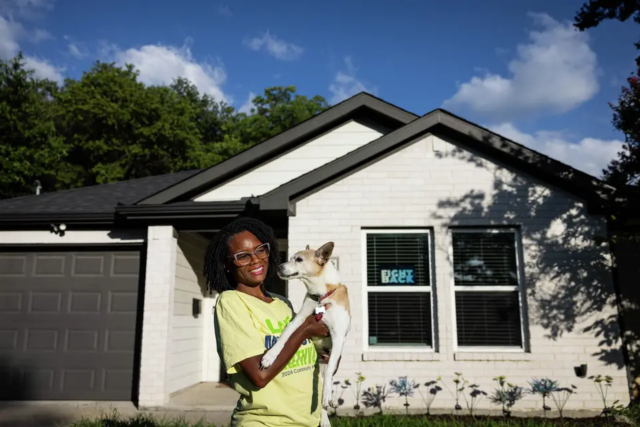
Jolly’s from Detroit, lived in Louisiana, and eventually came to Dallas. Now, she’s a part of the Queen City Neighborhood Association and runs a walking club in the community.
With the new investment in the area, she said rising property taxes are a concern for herself and longtime residents. She said there should be new measures in place to address and prevent displacement.
“Every person has a story, and so before you come to a community and you invest, yes, we’re excited for the investment, but get to know the people who are here,” Jolly said, which includes taking time to learn about the longtime residents and relationships that make the area unique.
Resident wants to see ‘facelift’
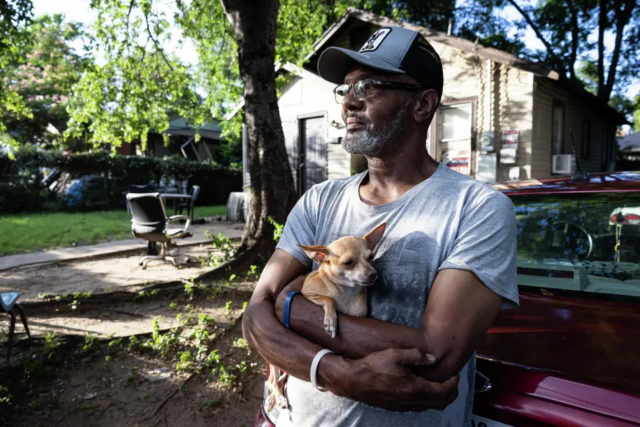
Lawrence Campbell, a renter at his home since 2018, said his phone rings every day with someone interested in buying the house.
“They’re buying up all of the old properties,” he said. “The new houses, that’s actually better.”
The houses give the area a needed “facelift,” he said, and the rising property taxes come with the territory. The new aesthetics could change how neighbors behave, he believes.
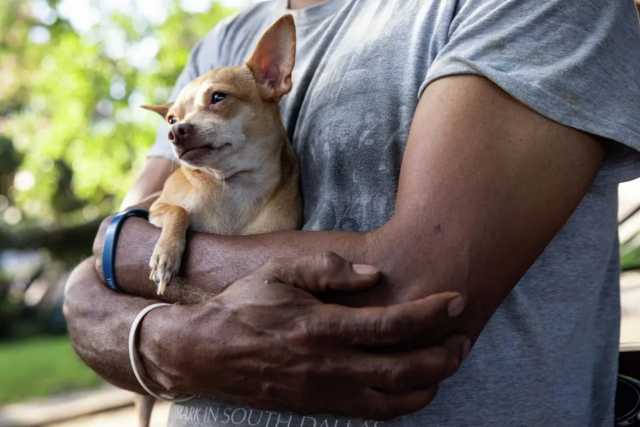
“Every night you’re hearing shooting, ‘pow, pow, pow,’ when you’re getting to sleep,” Campbell said. “That’s not good.”
More recently, he said police have been more visible in the area. He hopes the visual cue of new homes translates to more attention from the city and its services. New homes, with designs that fit into the neighborhood, would be very welcome, he said.
Younger generation sees opportunity
For generations, Jamecia Johnson said her family has lived in a neighborhood where the community looks out for each other, a culture she doesn’t want to see pushed out.
Still, the 27-year-old approaches the issue with curiosity. She attended an earlier city meeting, hoping to gain more information about what’s changing. The newer homes, she said, are charming.
She’s seen a variety of houses cropping up with glass features and prominent garages. The aesthetic changes are less of a concern for her, she said. Where she lives, the property value estimates have gone up by more than $30,000, online appraisal district records show. That’s not necessarily a bad thing, she added.
Johnson’s hoping the development ushers in better infrastructure. She wonders if the new zoning could help score commercial development, even a new gas station in an area of the city that’s had calls for new amenities. She’s taking note of work being done and new businesses near the developing Forest Theater. “It brings up the whole community instead of just, like, one property,” Johnson said. “This empty lot sells, and the block is going up, but we’re worth more.”
Still, she said she doesn’t want to lose her home to taxes, with plans for her younger family members to inherit it. She said she’s not naive to her neighborhood’s proximity to highways, downtown and Fair Park. And there’s sentimental value.
“My mom lived in the house when she was six years old,” she said. ”It means a lot.”
Johnson’s mother, she said, has more skepticism, sending her to scope out the new zoning at a plan commission meeting last month.
“My mom, she’s like, ‘No, absolutely not. You need to go be sure they’re not trying to push us out. Be sure everything is for the community instead of for the city.’ ”
This reporting is part of the Future of North Texas, a community-funded journalism initiative supported by the Commit Partnership, Communities Foundation of Texas, The Dallas Foundation, the Dallas Mavericks, the Dallas Regional Chamber, Deedie Rose, Lisa and Charles Siegel, the McCune-Losinger Family Fund, The Meadows Foundation, the Perot Foundation, the United Way of Metropolitan Dallas and the University of Texas at Dallas. The News retains full editorial control of this coverage.
Southern Dallas Reporter
Aria writes about southern Dallas and local government. Aria grew up in Dallas. She is a graduate of the University of Texas at Austin and Dallas College. Aria has interned at the Austin American-Statesman, the Texas Tribune and the El Paso Times.

