By Tiara Cooper

A new report just released by Texas Defender Service shows that ninety-two percent of the death sentences sought by the Tarrant County District Attorney’s office since 2012 have been against people of color.
When I first saw that number, ninety-two percent, it grabbed ahold of my soul. As a Black woman and long-time resident of the Dallas-Fort Worth metroplex and community organizer, and as someone who is formerly incarcerated myself, it pained me on a deeply personal level to see how racism still blatantly shapes how we operate in Texas.
The report is a harsh reminder that Texas’s system of capital punishment has not left its historical connection to lynching behind. The system has undoubtedly gotten better at disguising racial discrimination and at “disappearing” our people, but at its roots, the system still does not treat Black people and other people of color equally. This report shatters any false notion around how the courts and the system operate, and any notion that these structures are fair or just.
Researchers also found that Tarrant County is responsible for one-quarter of all death penalty trials in Texas since 2020, despite having only seven percent of the state’s population.
The disturbing findings do not stop there.
According to the report, Tarrant County persists in using an aggressive practice known as up-charging, despite several court rulings finding that the charges prosecutors are bringing are improper. Up-charging is the practice used by prosecutors to threaten an individual with a more severe penalty than called for in order to force a guilty plea. The report found more than a quarter of Tarrant County capital murder cases during the past two decades ended with a non-homicide conviction and ten percent of those defendants got no jail time. That represents an egregious overreach on behalf of prosecutors.
The numbers do not lie. Who is viewed as redeemable, and who is not, is at the core of up-charging. It is Black and Brown people who have had to face these injustices and the devastating consequences of up-charging.
The report’s findings not only highlight the arbitrariness and racial bias of the death penalty in Tarrant County, but also the need to bring to the forefront how all of Texas decides death penalty eligibility.
For example, the “Law of Parties” in Texas holds someone criminally responsible for an offense committed by another under certain circumstances, even if they did not commit the act themself. They can face the same charges—up to capital murder—as the primary perpetrator. These disproportionate, life-altering sentences for non-killers are fraught with racial disparities and used as leverage for plea deals without any deterrent effects. In some cases, like that of James Broadnax out of Dallas, who was executed on April 30, new evidence showed that the actual killer ended up with a less severe sentence than James, who didn’t kill anyone.
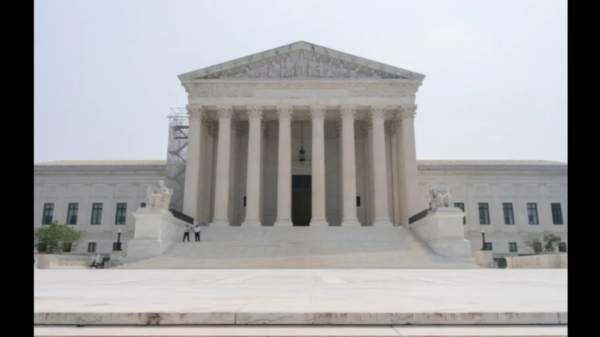
Furthermore, Broadnax’s sentence was heavily influenced by personal rap lyrics introduced as evidence of his future dangerousness, which a jury must find in order for someone to be sentenced to death in Texas. A petition to the U.S. Supreme Court argued that the State relied upon racial stereotypes and violated free speech in order to sentence him to death.
We may have fewer death sentences today than thirty years ago, but the application of the death penalty remains racially biased, and we are still mostly killing people of color and poor people in Texas. The ability to afford a qualified, competent attorney can be the difference between life and death.
Texas Defender Service’s report on Tarrant County deserves serious attention. We need to get louder about what is happening because we cannot allow these things to keep happening in our backyard. We need to bring back the “shame factor” and hold those responsible for this blatant racism accountable.
In the process, we must ask ourselves a couple of questions. Why is the death penalty used to disproportionately punish people of color? Why are people of color disproportionately seen to be irredeemable and to pose a future danger despite a lack of evidence? Yes, white people are also executed, but the overall numbers tell us everything we need to know.
The time has come for all of us to reckon with the racism of the death penalty, in Tarrant County, in the state of Texas, and across the United States. We can no longer pretend not to notice when the evidence is so clear and compelling.
Tiara Cooper is a Senior Community Organizer for the NAACP Legal Defense and Education Fund in Dallas with a focus on dismantling white supremacy, ending mass incarceration, and organizing directly impacted communities.
Tiara Cooper is a Senior Community Organizer for the NAACP Legal Defense and Education Fund in Dallas with a focus on dismantling white supremacy, ending mass incarceration, and organizing directly impacted communities.