By Rita Cook
Correspondent
Texas Metro News
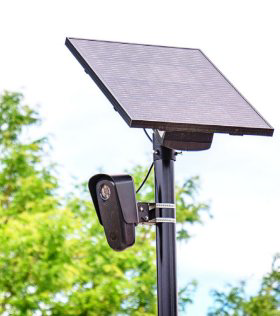
AUSTIN – Over the past decade cities like Dallas–Fort Worth, Houston, Austin, San Antonio and the surrounding smaller suburbs have installed Flock cameras under the guise of helping police departments with capturing the bad guys.
It is a good idea in theory, and these cameras have been successful according to my law enforcement buddies.
But residents in Texas and beyond feel these cameras are also stealing a person’s privacy too.
City councils approve the cameras, Police Departments install the cameras, and everyone lives happily ever after.
Unfortunately for the pro-flock crowd, many people are tired of having their freedoms taken away in the name of safety.
To that end, residents in Texas have been speaking up on the intrusiveness of big brother Flock cameras have come under the radar in the “big brother” conversations.
Simply explained, these cameras are automated license plate reader (ALPR) cameras and in addition to being used by police departments, neighborhoods, schools, businesses, and homeowner’s associations also use these cameras to help identify vehicles connected to crimes or investigations.
The cameras are usually mounted on poles, streetlights, neighborhood entrances, or near highways and parking lots with the ability to capture images of passing vehicles, read and record license plates and log the details of the vehicle’s make and model, color, any distinguishing features and time and location.
Plates are then supposed to only be used for “hot lists” to find stolen vehicles, wanted suspects, AMBER Alerts, and missing persons.
Over the past month there have been cities in Texas and beyond in which Flock cameras came under scrutiny and city councils were put in the hot seat regarding these cameras and the real intention.
Some U.S. cities have already removed, shut down, paused, or voted against renewing Flock Safety camera systems after public backlash over privacy, immigration-data sharing, hacking concerns, or lack of oversight.
A few of these cities include Santa Cruz, and South Pasadena, Calif.; Flagstaff, Denver, Cambridge, and statewide Austin, who discontinued ALPR/Flock-related deployments after backlash over surveillance concerns, though officials are now reconsidering the technology after recent violent crimes.
Bandera, Texas recently voted to terminate a Flock contract after privacy debates as well.
The concerns around the state and country are that these cameras are part of mass surveillance, ICE or federal agency access to local data, lack of city council approval, retention and sharing of travel-history data, cybersecurity concerns and concerns about tracking protesters or political activity.
This is not what Flock cameras were initially put in place in cities to do, and the captured data was supposedly deleted within months of it being obtained.
With all the issues now regarding Flock cameras it is a strong topic that could end up being further discussed in the next legislative session in January.
Even though Austin discontinued their cameras, Flock cameras have spread rapidly across Texas in the last few years.
While there is no reported public statement from Texas Governor Greg Abbott specifically endorsing or criticizing Flock Safety license-plate reader cameras by name, his administration and Texas law enforcement agencies have generally supported expanded surveillance and crime-fighting technology.
With that in mind, this technology has reportedly been used for tighter border security, in addition to vehicle theft, school safety, and policing initiatives, but who is making sure the data from the cameras is being deleted per the Flock camera selling point pitched to city council by the police departments?
And where does Texas policy fall regarding over surveillance?
Abbott did ban the red-light traffic cameras in 2019, arguing against automated traffic enforcement and in 2024 to 2026, Texas DPS investigated whether Flock was operating some systems without the proper state license, which raised privacy and regulatory concerns.
Overall, Abbott’s broader public-safety agenda generally aligns with expanded surveillance and policing tools and under his administration he has allowed and often funded law-enforcement use of automated license plate reader systems. These days however, growing political pushback over privacy concerns is becoming a bigger issue on both sides of the aisle since many Americans (and Texans) are tired of “big brother” surveillance taking away freedom in the guise of public safety.
Rita Cook is a world traveler and writer/editor who specializes in writing on travel, auto, crime and politics. A correspondent for Texas Metro News, she has published 11 books and has also produced low-budget films