By Fred Smith
Afram News
https://aframnews.com/
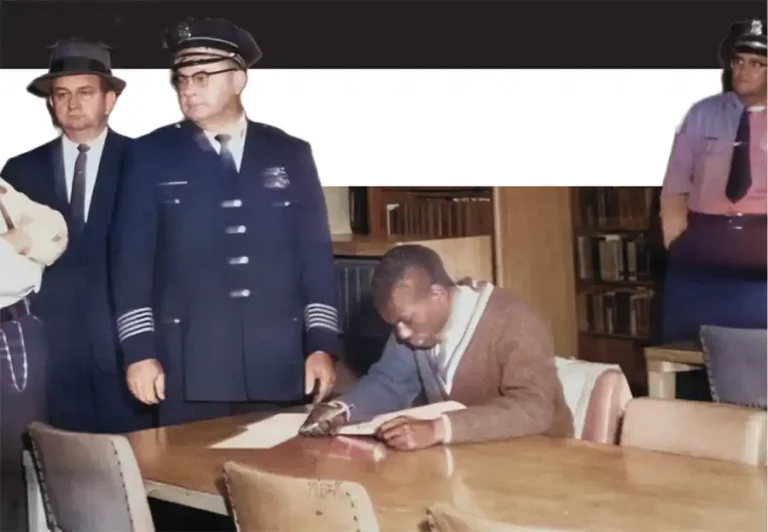
In 1961, nine Black college students in Jackson took a quiet but powerful stand against segregation by entering a whites-only public li- brary and attempting to read. At the time, strict Jim Crow laws enforced racial separation in public spaces, including libraries, which denied Black citizens equal access to knowledge and resources. The students, many from Tougaloo College, deliberately challenged these unjust rules through a nonviolent act of protest.
Upon entering the library, the students selected books and sat down to read, refusing to leave when ordered by staff. Their simple act of reading—something ordinarily seen as harmless—was treated as a criminal offense under segregation laws. Police were called, and all nine students were arrested and charged, highlighting the harsh realities Black Americans faced for asserting their basic rights.
The arrests quickly drew attention from civil rights activists and organizations, including the NAACP. The case became a symbol of the broader struggle against segregation in public facilities. It underscored how even the most peaceful actions could lead to punishment when challenging systemic racism in the South. Rather than paying fines, the students chose to serve jail time, a strategic decision meant to bring further awareness to their cause. Their willingness to endure imprisonment demonstrated courage and commitment, aligning with the broader philosophy of nonviolent resistance championed during the Civil Rights Movement. Their actions helped expose the moral contradictions of segregation to a wider audience.
The incident contributed to growing pressure to desegregate public spaces across the United States. It was part of a larger wave of sit-ins and protests occurring during the early 1960s, where young people played a crucial role in pushing for change. These efforts collectively helped shift public opinion and laid the groundwork for future legislative victories. Ultimately, the bravery of these nine students helped advance the fight for equality and access to education. Their protest remains a powerful reminder that even quiet acts—like reading a book—can become transformative when used to challenge injustice. Their legacy lives on as part of the broader Civil Rights Movement that reshaped American society.