The Navy captain and NASA astronaut will make history as part of the Artemis II mission, the first human lunar mission in more than 50 years.
By Andrea Bossi
Essence
https://www.essence.com/
To date, no Black astronaut has walked on nor orbited the moon.
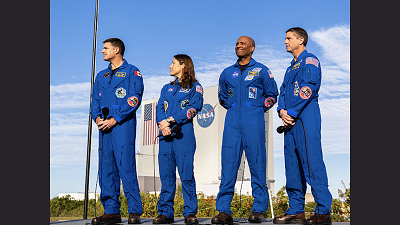
But that is set to change this spring. NASA’s upcoming mission, Artemis II, has a target date on the horizon, which will make Captain Victor Glover the first Black astronaut to travel to the moon. Glover is assigned to pilot the flyby mission and is joined by a crew of three other astronauts, including the first woman star sailor going to the moon, Christina Koch.
“We’re going out with a a plan, but you know they say no plan survives first contact,” Glover previously said in a U.S. Fleet Forces Command video. “We’re going to go out there and do the operation, and then we’re going to come back and really be able to give the next crew insight into how it was different from what we thought we were going to do.”
When the crew — which also includes astronauts Commander Reid Wiseman, NASA mission specialist Koch, and mission specialist Jeremy Hansen, of the Canadian Space Agency — eventually travels to the back side of the moon, it will lose contact with Earth, the international space station, family, and friends for 45 minutes until the other side.
“People are excited that we’re doing things again,” Glover previously told ABC. In addition to marking a historic moment for who will be on board, Artemis II will be the first time in more than 50 years that the U.S. goes to moon with humans on board. “To me, [representation] is important. People need to be able to see themselves in the things that they dream about and not just have to color it in their mind’s eye,” the 49-year-old continued.
Glover himself never set out to be a pilot explicitly. In fact, the California-born captain originally wanted to be a Navy Seal, not a pilot. But his dad told him, “‘with an engineering degree and being a Navy pilot one day, you might become an astronaut one day.’ So, thanks Dad!” Glover said to the USFCC.
Artemis II was previously aiming for a March 2025 blast off but was delayed and has since been rescheduled for a target launch date this year, on April 1. This mission will perform a flyby in order to help pave the way for a potential 2028 moon landing attempt.
“I love that we call great things that humans do, ‘moonshots,’l Glover continued. “Our generation gets to have our own moonshots, not just referencing what we did in the ‘60s and ‘70s.”