By Dr. Barbara Reynolds
Special to Texas Metro News

All must die. But legends live on.
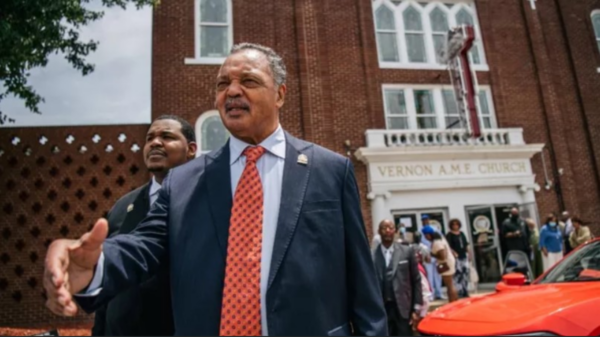
Few Americans embodied that truth more than the Rev. Jesse L. Jackson. At a time when public discourse has become harsh, when entire communities are demeaned in political rhetoric and when cruelty often masquerades as strength, it is vital to remember the power of a voice that demanded human dignity.
Jackson was more than a speaker; he instilled a generation with self-worth. His memorable words — “I Am Somebody” and “Keep Hope Alive” — continue to resonate. These phrases were not mere slogans crafted by consultants. They were lifelines for the soul, providing language to children dismissed in classrooms, workers denied opportunity and citizens told — subtly or bluntly — that they did not belong. Jackson understood a fundamental truth: Before policy can change, people must believe they are worthy of change.
A Personal Perspective
My perspective comes not as a distant observer, but as someone who wrote Jackson’s first unauthorized biography and covered him as a journalist beginning in the 1970s, shortly after the assassination of Dr. Martin Luther King Jr. I visited his Chicago home. His wife, Jacqueline, once took me to Ethiopia to report on famine. I witnessed the movement from the inside; I was part of it and lived it.
Private Struggles and Public Triumphs
To understand Jackson’s public ministry, it is necessary to understand his private wounds. As a boy in Greenville, S.C., he endured the stigma of being born outside of marriage during a period when such labels carried social cruelty. He faced threats, humiliation and the daily degradations of segregation. A white man once pulled a gun on him for whistling in his store. A lesser spirit might have retreated inward.
Instead, Jackson ran. A ninth-grade teacher recalled that he was always running for something — class president, honor society, student leadership. Even when he lost, he ran as if the act itself was defiance. That instinct to move forward — boldly and publicly — became the rhythm of his life.
All must die. But legends live on — not as nostalgia, but as obligation.
Jackson’s Emergence in Chicago
When I began covering him in Chicago in 1970, the city still bore scars of unrest from riots following King’s assassination. Charred buildings stood as reminders of what despair can produce. The nation had lost King, and the North was discovering that its racial realities were no gentler than those of the South. Black pride surged alongside deep frustration.
Jackson emerged in that crucible — charismatic, camera-ready, unapologetically visible. He was not merely theatrical; he was strategic. King had begun to shift the movement’s focus from access to ownership — from riding the bus in dignity to owning the bus. Jackson absorbed that lesson and expanded it. Through Operation PUSH, he combined moral protest with economic leverage. Corporations were pressed to sign agreements to hire and promote Black employees and stock Black-owned products. Churches mobilized consumers. Boycotts became organized instruments, not outbursts.
Within a few years, the results were visible: Black managers in grocery chains, Black drivers operating delivery trucks and economic inclusion that moved beyond symbolism into payroll.
The Political Impact
Jackson understood that politics without economics is hollow. When he ran for president in 1984 and 1988, the chants of “Run, Jesse, Run” filled arenas. Yet he often reminded supporters that he was urging thousands to run with him — for sheriff, state legislature and Congress. His Rainbow Coalition was not just racial; it was aspirational. Farmers, laborers, environmentalists and students — a broad tent of Americans who believed democracy should work for those outside the traditional corridors of power.
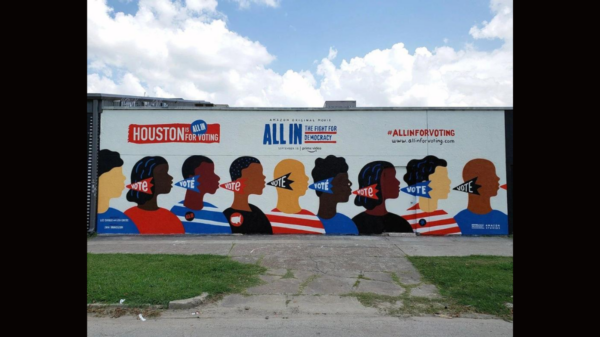
His campaigns surprised the political establishment. With limited resources compared to rivals, he won millions of votes and expanded the electorate. He registered new voters and forced his party to reckon with constituencies long treated as peripheral.
Diplomatic Actions and Recognition
Jackson also showed daring independence. In 1983, against the caution of the State Department, he traveled to Syria to negotiate the release of a captured U.S. Navy pilot. Later, he helped secure the freedom of hostages in Cuba. He entered diplomatic arenas not because protocol invited him, but because conscience compelled him.
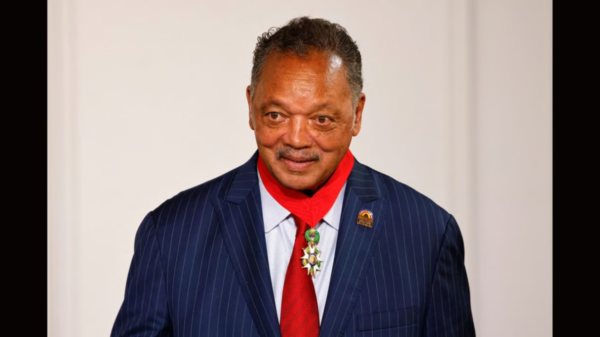
Over the decades, accolades accumulated: honorary degrees, national recognition and the Presidential Medal of Freedom. Many historians argue that without the infrastructure of voter mobilization and coalition politics Jackson built, the path to the presidency for Barack Obama would have been much steeper.
The Moral Core of Jackson’s Legacy
Yet reducing Jackson’s legacy to electoral milestones would miss its moral core. He gave wounded people language for their worth. In times when immigrants are described as disposable, when entire nations are disparaged and when racial caricatures reappear in digital form, the need for moral uplift remains urgent.
In his later years, Jackson’s body showed the frailty of age and illness. But movements are not confined to muscle. They endure in memory, in institutions and in generations who learned to stand straighter because someone told them they were somebody.
Conclusion
All must die. But legends live on — not as nostalgia, but as obligation.
We know Jesse Jackson changed America. The larger question is whether we will continue with his audacity and courage to insist on changing public policy until all of us are indeed somebody.