By Dr. Rema Reynolds Vassar
Michigan Chronicle
https://michiganchronicle.com/
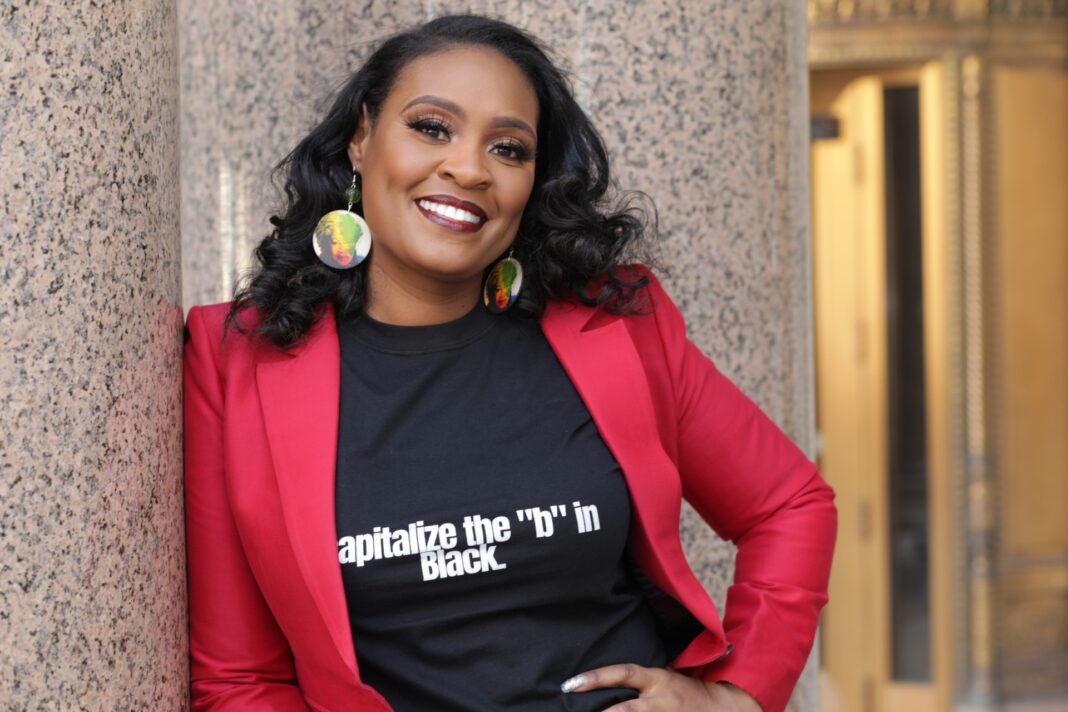
On a Friday evening in early February, I arrived at what I believed was a reception. Instead, I walked into an ambush. Without my knowledge or consent, Michigan State University’s president had transformed a social gathering into a working dinner—and made me the agenda item. In front of trustees and administrators, he publicly admonished and chastised me for my Bridge Michigan op-ed calling for MSU to reinstate dismantled diversity, equity, and inclusion programs.
While I explained my actions, he interrupted, “Do you know what it means to be a trustee?”
If being a trustee means remaining silent while students navigate racial violence with gutted institutional support, if it means abandoning our fiduciary duty to question and verify, if it means protecting administrators rather than the students we are elected to serve—then I confess: I do not know anything about that.
However, I do know what the Michigan Constitution says. As trustees, we are the only oversight body for Michigan State University. We are elected—not appointed—to govern this institution and ensure it fulfills its land-grant mission. My role is not to rubber-stamp administrative decisions or to make administrators comfortable. My role is to question, to verify, and to maintain the integrity of MSU’s commitment to access, opportunity, and excellence for all students.
What I experienced at Cowles House was the price Black women pay for refusing to play the role power structures demand of us. We are offered a choice, though it is no choice at all: Be the princess who smiles, accommodates, and causes no trouble for those in charge. Or be the villain who speaks truth, demands accountability, and centers the voices of those most harmed by institutional decisions.
I have been cast as the villain in MSU’s fairytale.
The Princess or the Villain
The president claimed he had no knowledge I was writing an op-ed criticizing MSU’s abandonment of equity commitments. Mischaracterization. Inaccurate. On November 14, 2025, I emailed him a longer version of the op-ed—written before the Department of Education withdrew its legal appeal. Three days later, we discussed it by phone. He knew. But truth becomes inconvenient when it contradicts the narrative that positions me as a rogue trustee acting without consultation. In real life, I pleaded for nearly a year for cooperation and collaboration to no avail.
In his public response, he promised to “correct several inaccuracies” in my column. Yet when pressed by reporters, he offered only semantic games: changing a title from “Vice President for Diversity, Equity and Inclusion” to “Vice President for Inclusive Excellence” is not eliminating a position, he argued. Reducing the Council of Racial and Ethnic Students (CORES) funding from $100,000 to $4,500 while requiring groups to dilute identity-specific language is not dismantling support structures, he claimed.
But students tell a different story.
In a Lansing State Journal article, Jayanti Collins, president of MSU’s Black Students’ Alliance, stated clearly: “Dr. Rema bravely spoke about the experience of Black organizations and students here at MSU, echoing and amplifying what we’ve been trying to convey about what our organization has been going through. That type of advocacy is exactly what is needed to get real accountability and change in motion.”
She also confirmed what I already knew: “No leadership from the university has reached out since this article came out.”
No outreach. No conversation. No genuine engagement with the students whose experiences I documented. Just institutional defensiveness and attacks on my credibility.
The Pattern: Punishing Black Women Who Refuse Silence
This is not new. This is the predictable consequence for Black women who refuse to accommodate institutional demands for our silence.
In 2023, after I publicly called for the release of the Nassar files, attacks came rapid-fire. A fellow trustee filed a complaint that triggered a costly investigation. The board voted to censure me and ask Governor Whitmer to remove me from office. She declined. The censure expired in December 2024, but the message was clear: Black women who hold power accountable will be punished, publicly humiliated, and pushed out if possible.
Now, because I documented what students themselves report—racial violence on campus, stripped funding for student organizations, the elimination of equity infrastructure—I am once again positioned as the problem. Not the nooses in the campus store. Not the racial slurs painted on buildings. Not the Black students who have filed civil rights complaints for four years without investigation. Me. The trustee who refuses to pretend everything is fine.
The villain or the princess. Those are the roles available to Black women in positions of authority. Accommodate institutions and be celebrated as collaborative, collegial, reasonable. Challenge power and be dismissed as a bully, divisive, inaccurate, a problem to be managed.
When Black Women Choose Institutions Over Students
Perhaps the most painful part of this trite tale is watching Black women positioned as pawns.
Board Chair Brianna Scott and I are two of only four Black women to ever serve on Michigan State University’s Board of Trustees in the institution’s entire history. Four. In over 170 years. We should be working together on behalf of Black students who desperately need advocates at the highest levels of university governance. Instead, she has publicly opposed my efforts to demand accountability for the dismantling of equity programs.
She should know the price Black women pay for defending Black students, yet she filed the complaint against me that cost taxpayers $2.4 million and resulted in my censure. She was the arbiter of the retaliation that comes with challenging institutional power and demanding transparency. And she has consistently made her choice: protect the administration, not students, and certainly not sisters.
After my recent op-ed, she told reporters she believed my column “cast doubt on the university” and contained “mischaracterizations.” She said she had met with student groups and heard their concerns but ultimately sidedwith administrators’ claim that “the decision making that has been done by our administration has been appropriate.”
A 68% Black graduation rate is appropriate?
Students’ voices and very real outcomes apparently matter less than maintaining good relations with the president’s office.
This is what accommodation looks like. This is the princess role in action. And it comes at the expense of the very students we were elected to serve.
I refuse.
What Accountability Requires
Being a trustee should mean serving students, not protecting administrators from critique. It should mean demanding transparency when the university refuses to release disaggregated data that would reveal the real impact of “compliance-driven adjustments.” It should mean centering student voices—especially when those voices contradict institutional PR. It should mean using our constitutional authority to question, to verify, to hold the institution accountable to its land-grant mission.
MSU can rename offices. It can issue statements affirming commitment to inclusion. It can circulate internal memos with PR points to respond to my claims. But none of that changes what students experience daily: navigating a campus where equity programs have been gutted precisely when racial violence escalates, where civil rights complaints go uninvestigated, where student organizations that center marginalized identities face impossible choices between survival and mission.
Legislators, leaders, alum, and concerned citizens now face their own choice. Will you protect students? Will you meet with Black Students’ Alliance, CORES groups, and other impacted organizations to hear directly what they experience? Will you demand the disaggregated data that supports their stories? Get involved. Get into it.
Students are watching. The community is watching. History will record which side you choose.
I am a trustee elected to serve students, not to make power comfortable. If that makes me a villain in the eyes of MSU’s administration, I’ll be that. I represent students who have been told for far too long to be grateful for scraps, to accept rebranding as progress, to smile while their support systems are dismantled.
They deserve trustees who refuse to be silent. They deserve trustees who will be the villain if that is what accountability requires. They deserve trustees who understand that we are the only oversight this university has—and that our constitutional duty is to govern, to question, and to protect the integrity of MSU’s mission.
I will continue to be that trustee. Unapologetically.
Dr. Rema Vassar is a Trustee of the Michigan State University Board of Trustees and Full Professor of Educational Leadership at Wayne State University. These views are her own.