By Dr. Julianne Malveaux
Economic Development
https://www.juliannemalveaux.com/
Every December, we celebrate the story of a child born in a manger. We adorn Nativity scenes with soft light and warm sentiment, but we rarely linger on the truth of the story: Jesus was born housing insecure. There was no room at the inn. His family was displaced, turned away and forced to improvise shelter in the most vulnerable of circumstances.
Two thousand years later, the story resonates more than we admit.
Millions of Americans are, in their own way, “born in a manger” every year — living housing–challenged lives shaped by scarcity, instability and impossible choices. Some are unhoused, like Mary and Joseph on that fateful night. Others are paying rents that consume half their earnings. Still others — far too many, especially Black homeowners — stand at the brink of foreclosure, victims of a system that rewards wealth and punishes vulnerability.
We uplift the manger scene as a symbol of humility and hope. But it is also a warning: a society that cannot guarantee shelter for its families has lost its moral compass.
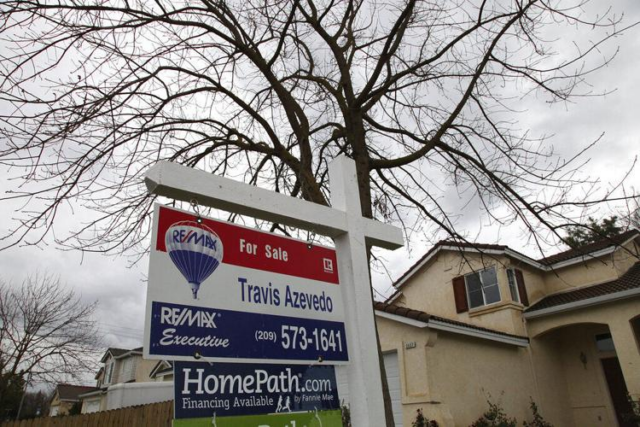
Today, more than 21 million renter households in the United States are cost-burdened, spending over 30% of their income on rent. Nearly half of them are severely burdened, paying 50% or more. Imagine giving half your paycheck to your landlord and then trying to cover food, medications, child care, utilities, transportation, and debt. That is not a sustainable life — it is a slow, grinding emergency.
And homeowners are not immune. The U.S. is short an estimated 2 million to 5 million housing units, a deficit that drives competition, inflates home prices, and locks out potential buyers. When supply is this tight, the people closest to the edge fall first.
The racial impact is unmistakable. Black homeownership sits around 44%, virtually unchanged since 1960, when housing discrimination was legal. White homeownership stands above 74%. A 30-point gap that has survived civil rights legislation, economic booms, recessions, and rising national wealth.
You cannot call that a coincidence. It is the legacy of policy — federal, state, and local — that allowed one group to accumulate wealth through housing while systematically excluding another.
And for Black families who have managed to secure a foothold in homeownership, that foothold remains fragile. Seniors lose homes over rising taxes and insurance costs. Reverse mortgage foreclosures hit Black neighborhoods at six times the rate of white ones. Investor groups circle aging homeowners, making quick-cash offers for properties that will soon be flipped into half–million dollar condos. A home that took one family a lifetime to build equity in can disappear in a single generation.
This is not just a housing problem — it is a wealth extraction problem.
For Black seniors, home equity represents up to 75% of total wealth. When that home is lost — to foreclosure, tax sale or forced sale — the wealth that should have transferred to children and grandchildren evaporates. The racial wealth gap widens. And without intervention, it will keep widening.
Housing is not just about shelter. It is about safety, stability, dignity and legacy. It is the ability to put down roots without fearing that rising rents or rising taxes will rip them out. It is the difference between a child entering school from a place of security or a place of chronic instability. It is the difference between a senior aging in comfort or slipping into homelessness after a medical setback or a property-tax spike.
We cannot celebrate the season while ignoring the message embedded in the manger. Housing insecurity is not a moral failure of individuals — it is a policy failure of government and society.
If we want a different future — one worthy of the season’s message — we must build it.
That means:
Protecting seniors from losing their homes to tax foreclosure or reverse-mortgage traps.
Providing meaningful down-payment assistance to first-generation homebuyers.
Regulating investor purchasing that destabilizes communities.
Reforming appraisal bias and discriminatory lending.
Investing in the affordable housing we have underbuilt for decades.
None of these solutions are impossible. They are choices. And we must choose differently.
The nativity story reminds us that even sacred lives can start under precarious roofs. It is a seasonal call not just to charity, but to justice. If we are serious about honoring its message, we must confront a national housing crisis that leaves millions insecure and strips a disproportionate number of Black families of the very wealth they fought so hard to build.
Jesus was born in a manger because there was no room at the inn.
In 2025, there is no excuse for millions of Americans — especially Black Americans — to face the same fate.
Julianne Malveaux is an economist, author and commentator. Her forthcoming book, “Lynching Culture, the Wealth Gap, and Reparations,” examines the intersection of racial violence and economic injustice.