By Derrick Lane
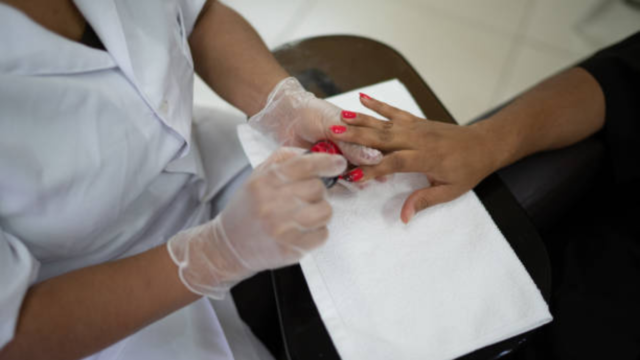
When getting a much-needed mani or pedi, usually the only things to worry about are a long wait or your favorite color being out of stock. Unfortunately, some potential dangers may also be lurking in the salon that aren’t so pretty. In 2014, a 22-year-old Brazilian woman may have contracted HIV – simply by getting her nails done.
The woman was diagnosed with advanced HIV, but she didn’t participate in any of the most common risk factors. She never had sex, surgery, a blood transfusion or any tattoos or piercings. Her unique case was published in the journal AIDS Research and Human Retroviruses.
Ten years before her diagnosis, the woman remembered sharing nail instruments with her cousin who was a manicurist. The cousin was later diagnosed with HIV. The two women had very similar strains of the virus.
According to U.S. News & World Report, about 75 percent of salons in the U.S. don’t follow state protocol for disinfection, leaving you at risk of serious infections, like HIV or hepatitis C.
Contracting HIV in a nail salon is a possibility, according to experts. “Any sharp instrument could theoretically carry this risk,” Dr. Ronald Hershow, an infectious disease expert at the University of Illinois at Chicago School of Public Health, who has studied HIV in women told Yahoo Health.
The skin around nails is extremely sensitive and when doing manicures and pedicures Dr. Hershow explains, “they use metal instruments and files, and there might be blood or blood-derived body fluids, like the oozy material that comes out of a skin lesion. If you’re filing a cuticle and get a little blood on the file, then use it on a person, there would be some risk, yes.”
This, of course, makes businesses that offer piercings, acupuncture and tattooing also potential sites for risk. According to HIV experts, instruments that can penetrate the skin or become contaminated with blood should be sterilized or thrown away after ONE use. These include:
- Razors, cuticle scissors and tweezers
- Ear piercing devices
- Needles used for hair removal (electrolysis), acupuncture and tattooing
Salons are high-traffic areas and there’s no way you can control who will be there before you or after you.
However, you can do your due diligence to make sure that your salon and manicurist are providing quality services that minimize health risks. Here are a few things you can do to protect yourself.
Ask about the disinfection practices.
Most salons will have UV sterilizers displayed for their customers’ peace of mind, but you may be shocked to find out that these may be just for show! Many salons have fake “blue light toasters” that offer nothing more than the depiction of sterilization.
For guaranteed sterilization, ask your tech to soak tools and cleanse bowls and stations in a barbicide bath. This blue solution has proven to be effective in killing tuberculosis, hepatitis B and hepatitis C and HIV-1.